honey&bunny. On the adventures of food.
honey & bunny / Daisuke Akita / Ulrike Koeb
Patrycja Wojciechowska: Ever since I encountered your practice I have been thinking about the way you work. What struck me was how it explores the very nature of performance, which you treat as a medium. Both contemporary food consumption and food production have performative and ritualistic character on many levels. What you dissect is this very Western idea of dining out, of gourmet. And true it's great fun, but at the same time, it's a ritual that in many aspects is based on exclusion. It creates a different dynamic in terms of social bonds. I mean it not only in terms of dining out, per se, but also in terms of how we treat food, and the way we think about it.I believe your approach to be very ironic, humorous, but also critical. You reside in a space of certain ambivality, where the performance and the ritual as characteristics coincide with what you do and the way you use it as the method.
So I would like you to talk about the nature of this kind of dynamics, set between the ritual and the performance. You address the nature of particular performance (food performance), but you, yourselves, perform in a very particular way.
honey & bunny / Daisuke Akita / Ulrike Koeb
Martin Hablesreiter: If you decide to use food, it's in a way natural. Because, on one hand, food is still Nature, but on the other hand, it's completely Culture. So food itself is schizophrenic. The same as the process of eating is. On one hand it keeps us alive, and we need to eat the same way as animals do. Any kind of living creature, starting from bacteria. Anything or anybody who lives, needs to digest something. So this is pure Nature.
But on the other hand, whatever we eat is following cultural rules. We developed rules. We have all the dining rules. But it's more than that. We have laws. We have lifestyles. We have religions. Whenever you eat, you are invariably facing the clash of Culture and Nature. For us, this is really interesting.
We use irony to address it, but to explain this better, I think I need to go back a bit in our career. We actually started by doing just research. We wanted to know what we eat. We found a lot of stories that prove that whatever we eat and how we eat is firmly based on cultural ideas. Some of the types of breads we eat, for example, are more than 2,000 years old, like the croissant. Or at least the shape of it. And a meaning is still present inside. So it is really interesting for us to say; "Okay, what is it?" It's implicit knowledge at the end. It's in the language that we speak. But it is also in the language that we integrate into our bodies. That's something very serious. I think we started to use humor, because there are so many taboos when it comes to food, so many rules, and humor is, in many cases, simply making a mistake.
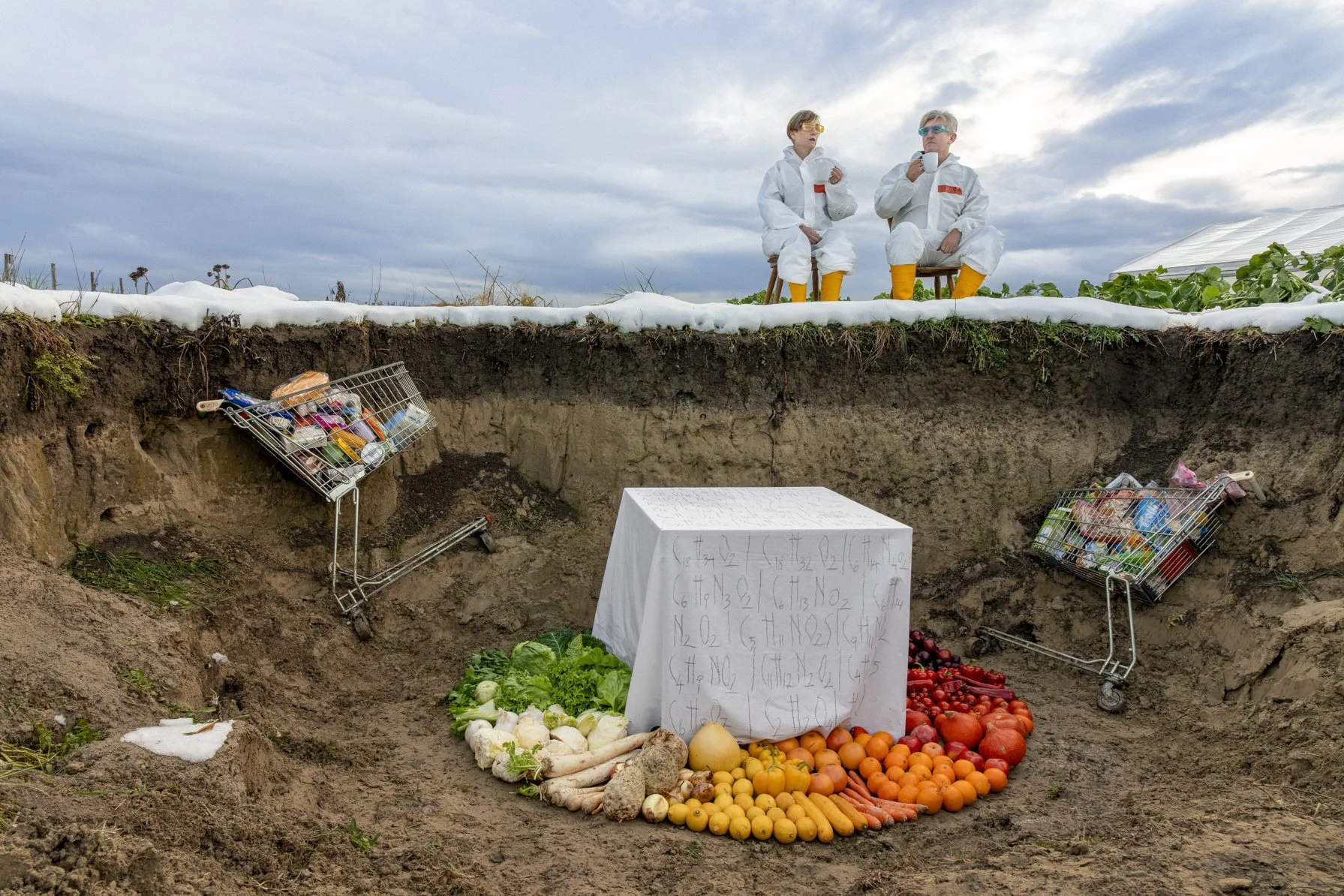
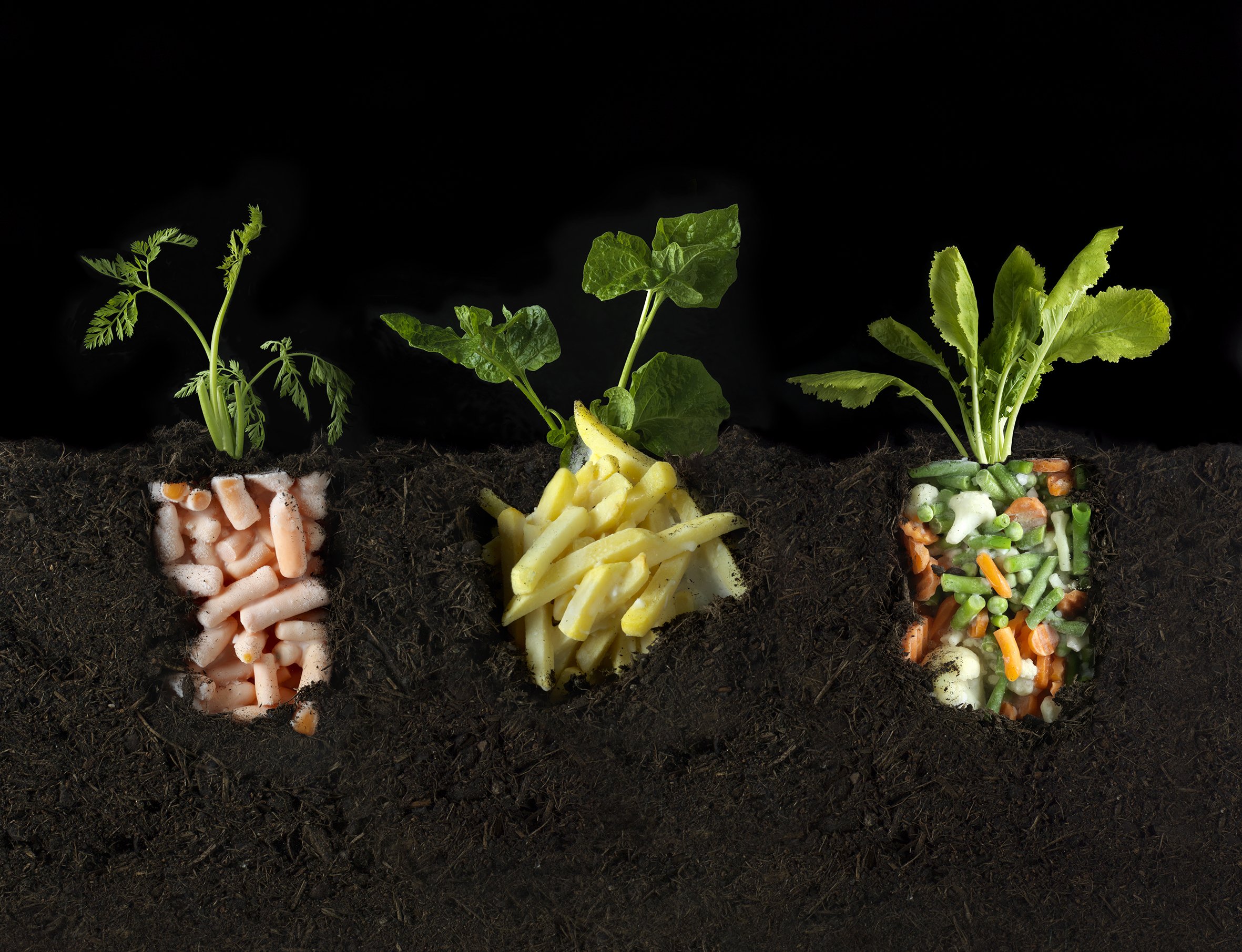
And it is either a mistake that you make, or a mistake that is contained within the system. If we look at it as a logical problem, it's like having double meaning within the language. Just to give you an example, if you look at the soil, it is completely irrational. Soil on the field produces our food. One of the most important goods we have is soil. It produces what we eat. But if you put soil on the table, it's dirt.
PW: I think, there is also this very strong cultural and political pressure to treat soil as dirt. We only just recently started to openly talk about it. Pointing out that soil is something that's alive, that is one of the most important things on the face of this planet, that it supports life itself. I think partly this idea of dirt comes from the strategies of massive agriculture, which treats the earth, the planet itself as a resource to be exploited, used, quantified and changed into money, to put it simply. So it is convenient for the industry to see it as dirt, because then it doesn't have value, and doesn’t have to be respected, it can be poisoned and abused with no consequences.
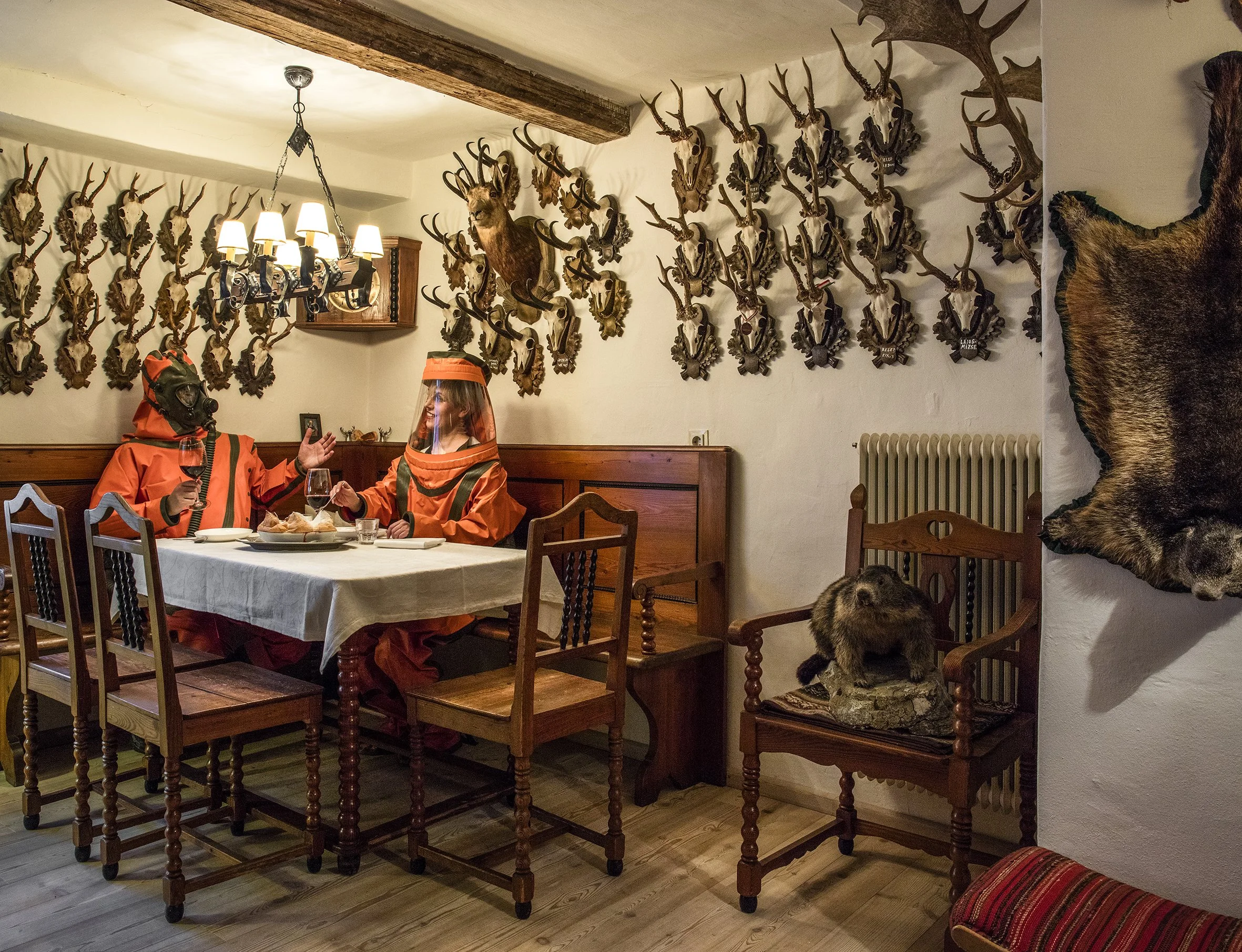
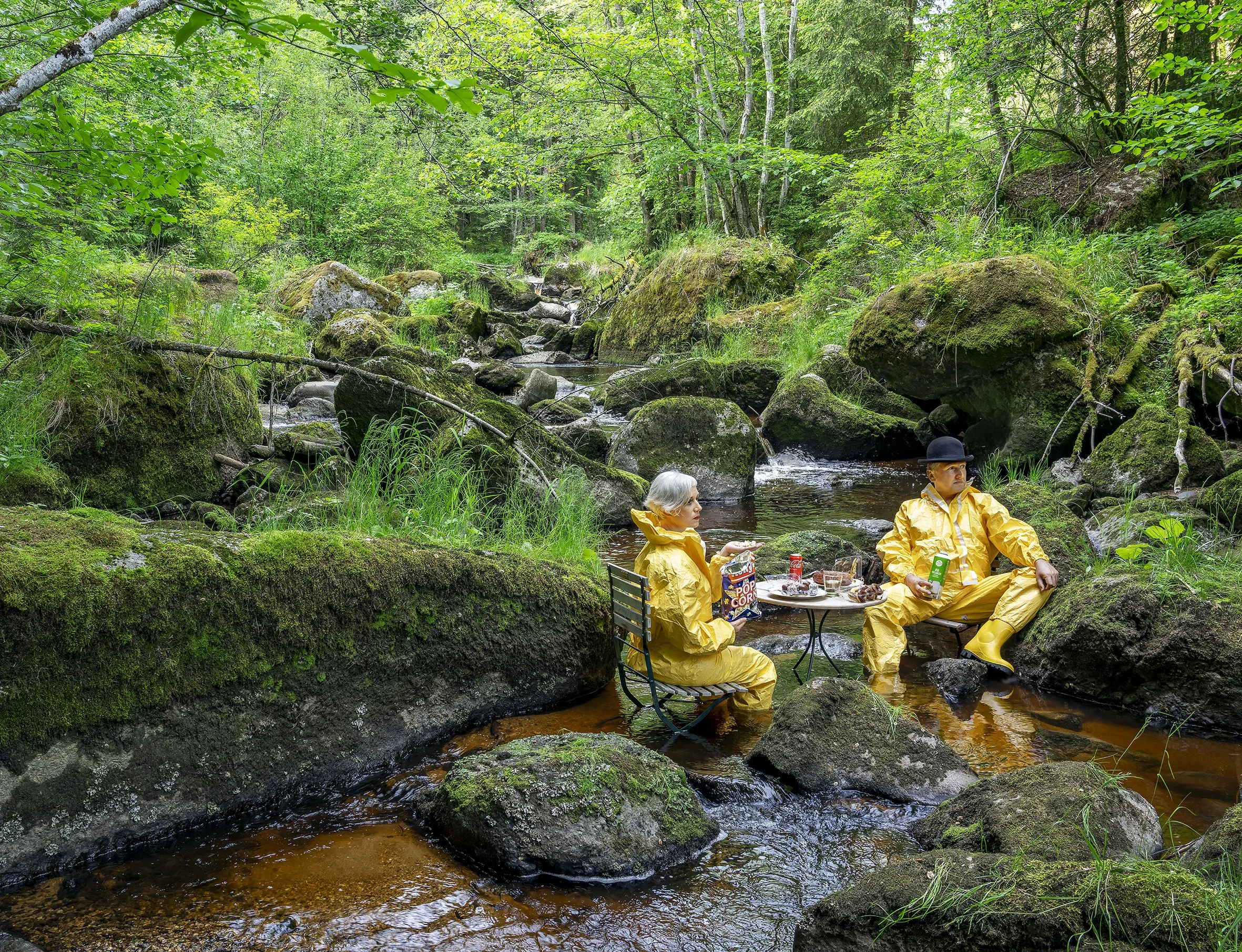
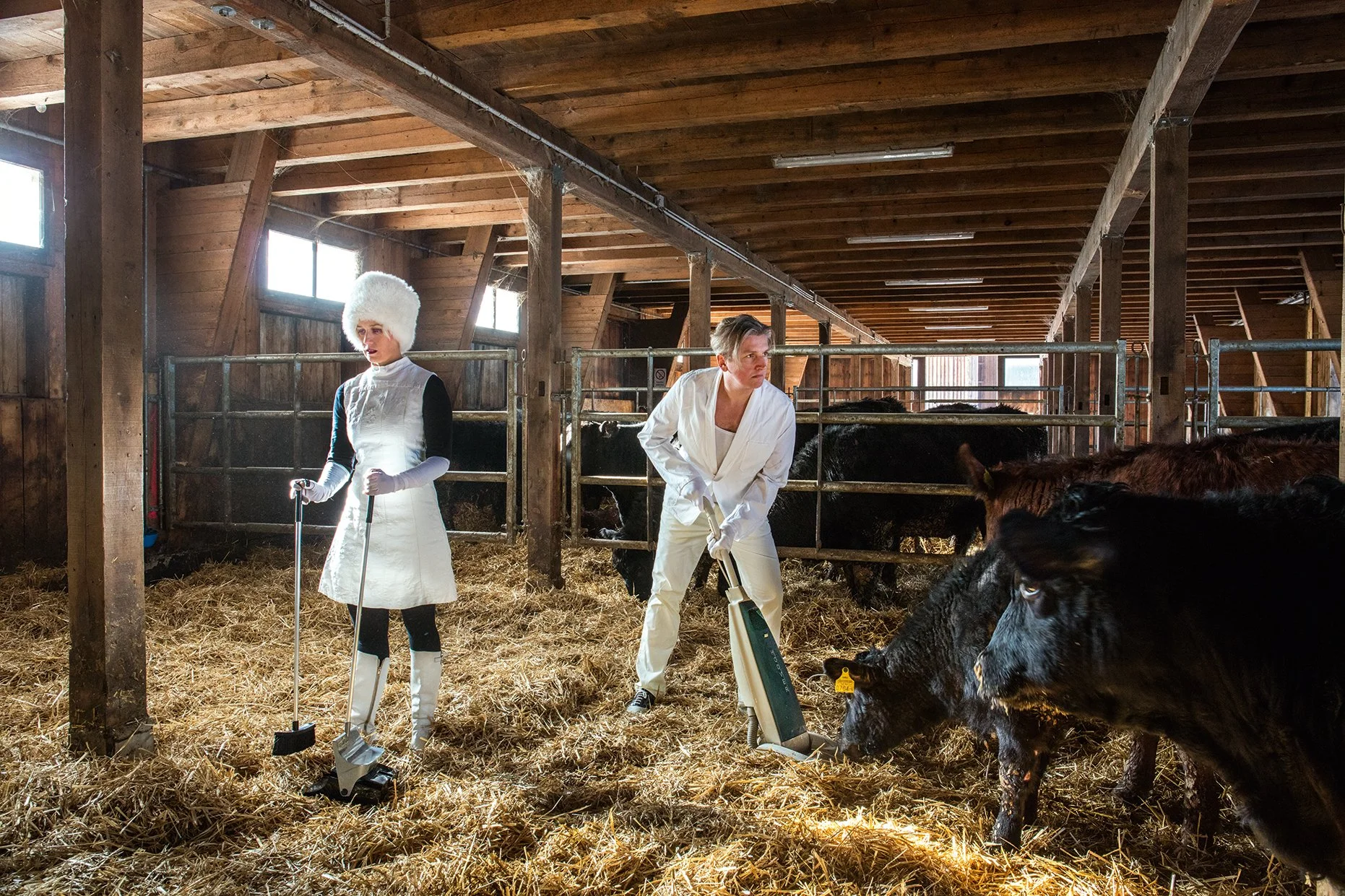
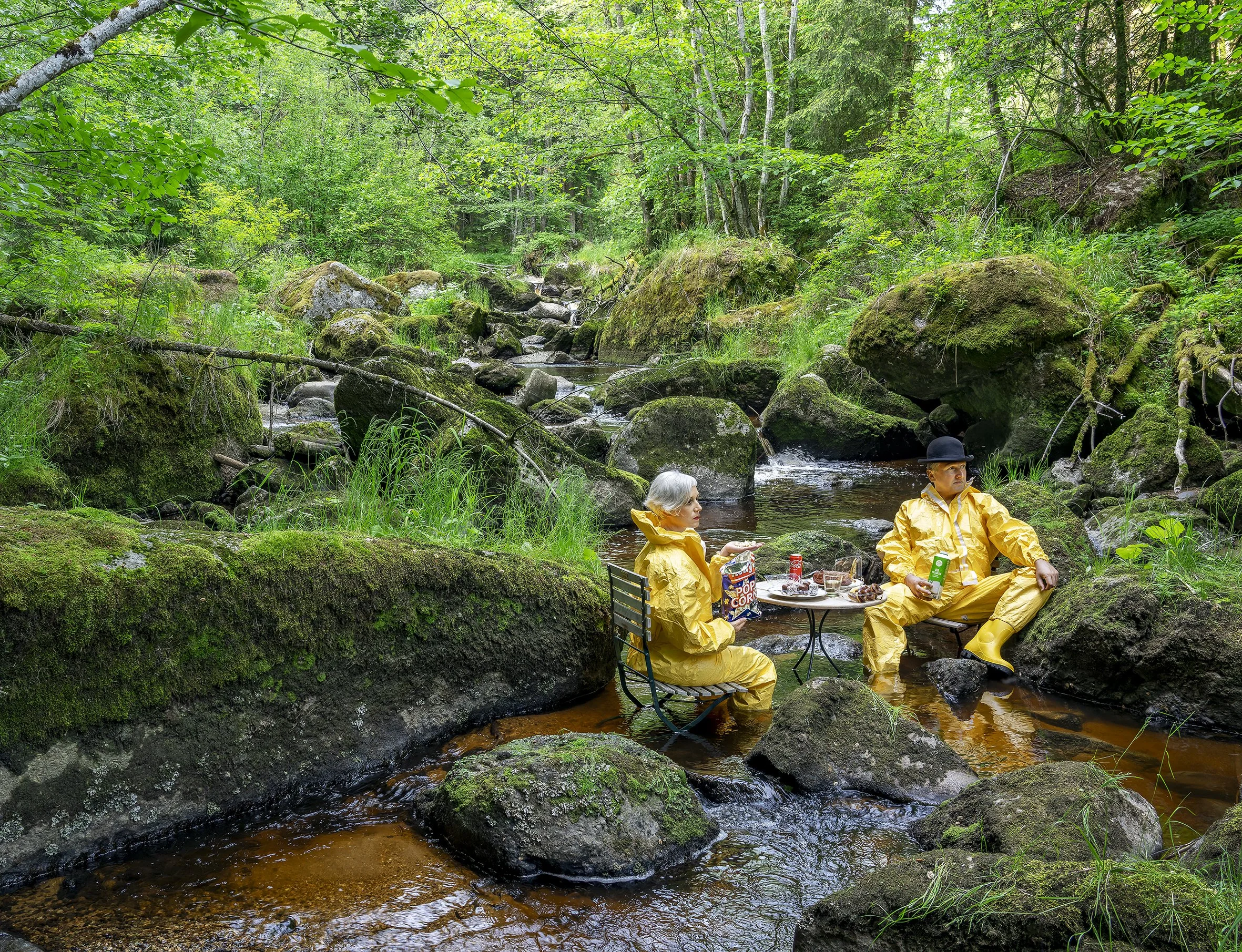
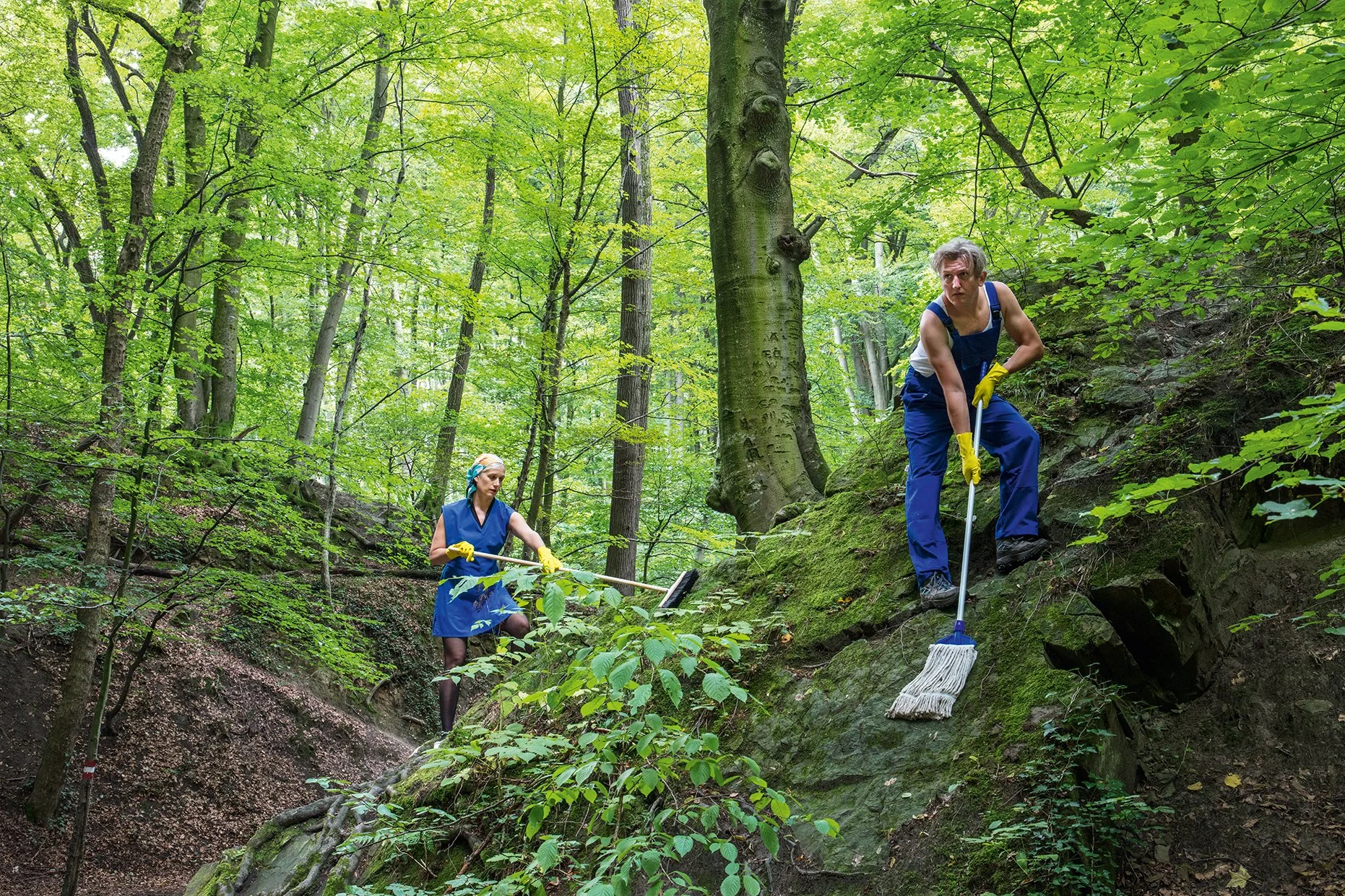
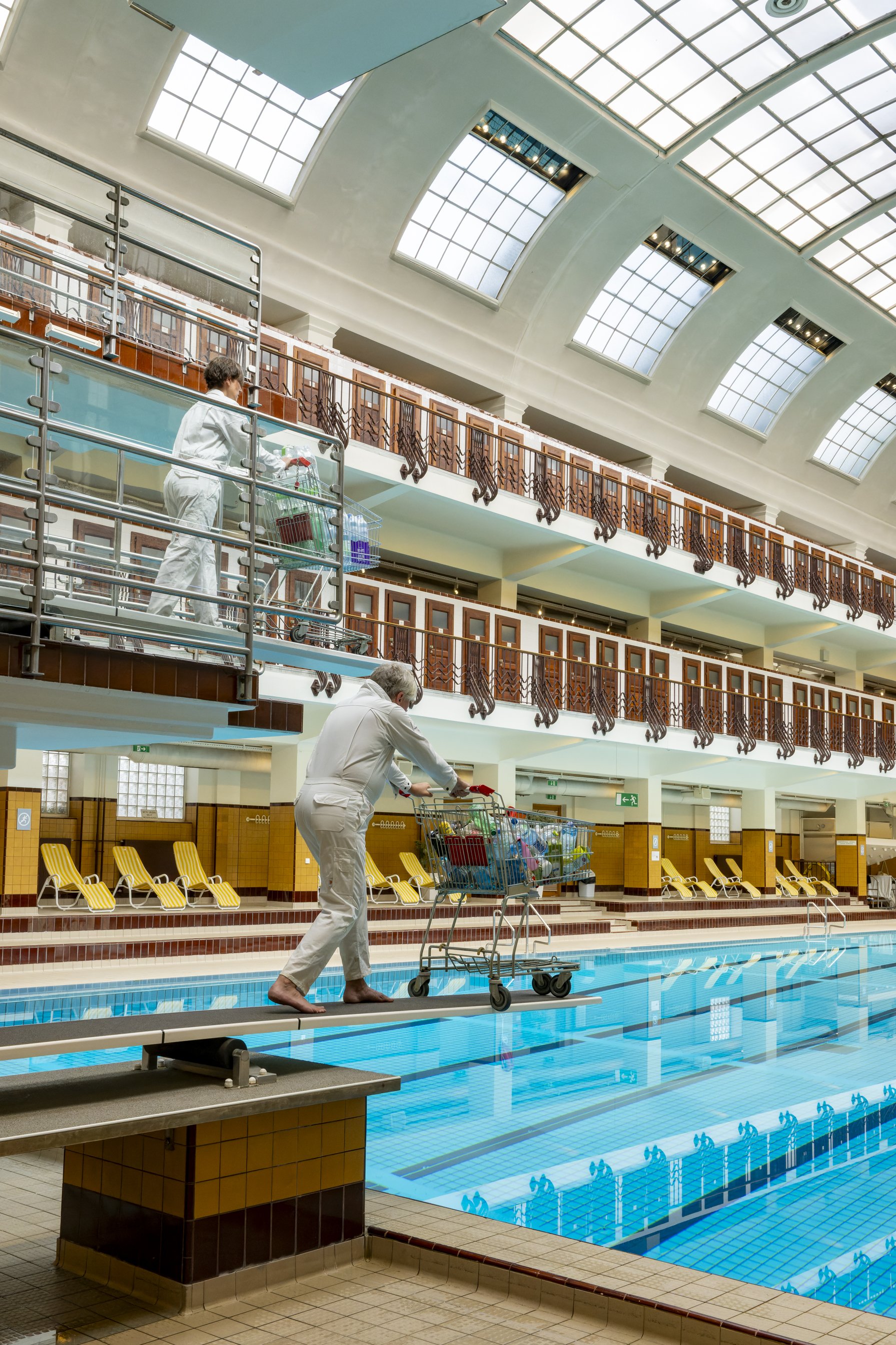
MH: There are several reasons for this. And it brings me a bit closer to our Cleaning Project. The soil itself is not controllable. In one small piece, there are more species than on the entire surface of the planet. And that is really interesting.
But to get back to humor or irony. We have learned over the years that if you make people smile a bit, or if you let people make a mistake on purpose, or if you make a provocation by the use of humor, then you open people's minds for at least a moment. And then they are open to new content. And that is a great opportunity.
If you look at food, it is so amazingly regulated. Wherever you look at how we combine ingredients, which ingredients we eat, and which not, all of this is subject to culturally based rules. If you look at all these taboos associated with food. For example, if you combine, I don't know, a cake with mustard by mistake, you think it's broken. So you throw it away. Just the wrong combination of ingredients makes a waste out of food.
And then we have tools. We have so many ideas and rules on everything. It is so weird. Actually, many of these rules were created by noble families. Even in all these democracies, we still try to eat like the King of England. And that's very strange.
But if you break these rules, and if you let people break the rules within a performance, they cross the boundary. And if you cross the boundary together, for a moment, it creates a new community. And then you can manipulate them.
PW: I think humor, in a way, disarms, and makes people drop their natural defences. It's quite interesting what you said about the rules. I grew up in Poland. And foraging is, or at least it used to be, quite a massive part of the country’s culture.
I grew up with my grandfather, following him around. During the season, he was picking chanterelles every morning for me to make me scramble eggs with them, because I love mushrooms. Now I live in the UK, where picking mushrooms is extremely regulated. And any form of foraging is so alien in the culture that people simply don't know how to do it. I grew up with the idea that; yes, you pick up stuff in the forest, but you leave a certain amount for the animals. There are ways to pick it so you don't damage the plant and so forth. It comes with this idea of seasonality, but also that the forest is something that's shared with the rest of the community that is non-human. Here it’s a hobby that doesn't translate the complexity of the environment and what we, Eastern Europeans do, is relentlessly vilified .
The other thing which I wanted to ask you, which goes back to your beginnings, is how you decided to look at the design of food. It also goes back to what I was saying about foraging. Food used to be grown, used to be seasonal, used to be, you know, a little bit wonky. And it didn't really matter how it looked like, as long as it was tasty, nutritious, and all of that, right? Now it's almost exclusively designed. And that design comes not only in terms of who controls the production of the food, and what sort of food is being produced. We've lost quite a lot of heritage varieties of vegetables and fruit purely because of the regulations on what can be grown, and who owns the rights to certain things and so forth. But there is another level of design, which you've mentioned. And that goes into how we serve the food, how it looks on a plate, how we combine the ingredients, and how we approach the whole ritual of eating. It is a matter of how it's embedded in culture, in the accepted aesthetics, that sense of prettiness. How the food needs to look pretty and attractive, and nice. You play with that quite a lot, for example when you divide it by colors, and it's all arranged very delightfully rainbow-like.
MH: I think you've asked me many questions. The first one is, yes, the very origin of our career is the question of design. But we understand design by different meanings.
The current meaning of design, which is really critical for me, is industrial design, in a sense that whatever we create needs to be industrially produced and at the end needs to provide a lot of money for the investors. So designers are treated like prostitutes. That's actually something I completely disagree with. But if we look back, let's say, before the Industrial Revolution happened, we look at the history of more than 10,000 years of creativity. And in my opinion, the use of creativity in order to do something with food is the very origin of civilization and culture. Because if you want to live in Austria, for example, and I think Poland is like that as well, you need to have an idea how to survive in the winter. So you need to preserve food. You need to transport food. You need to find recipes to make digestible foods, which are normally not digestive for us as human beings, etc. So civilizations, wherever you look, created ideas, on one hand, to fulfill what we call functions, make foods digestible, transportable, producible, and so on. On the other hand, each culture tried and still tries to integrate these ideas of food into specific cultural habits, rituals, religious rituals, creating hierarchies with the help of food.
If you look at David Graeber, for example, he said that the development of beer and bread in Egypt may have created an entire system which still exists within the culture.
On the other hand, we have this industrialised system. This is critical for me for several reasons. There are reasons why it could happen. Let's say I start with what we have now. Between 1850 and 1950 we experienced a basic cultural shift . And it was a shift of the ownership of the expertise. If you look at food or any other kind of housework, this was an expertise of a very female sphere . Each housewife in the oikos had the responsibility to take care of the winter household and say, "Okay, what do we eat and when?" So a housewife, even my grandmother was like that 40 years ago, was not deciding "What do I cook today?" It was more about, "How do I preserve what I harvested today so that we have it edible in January? What do I think about the entire oikos?”
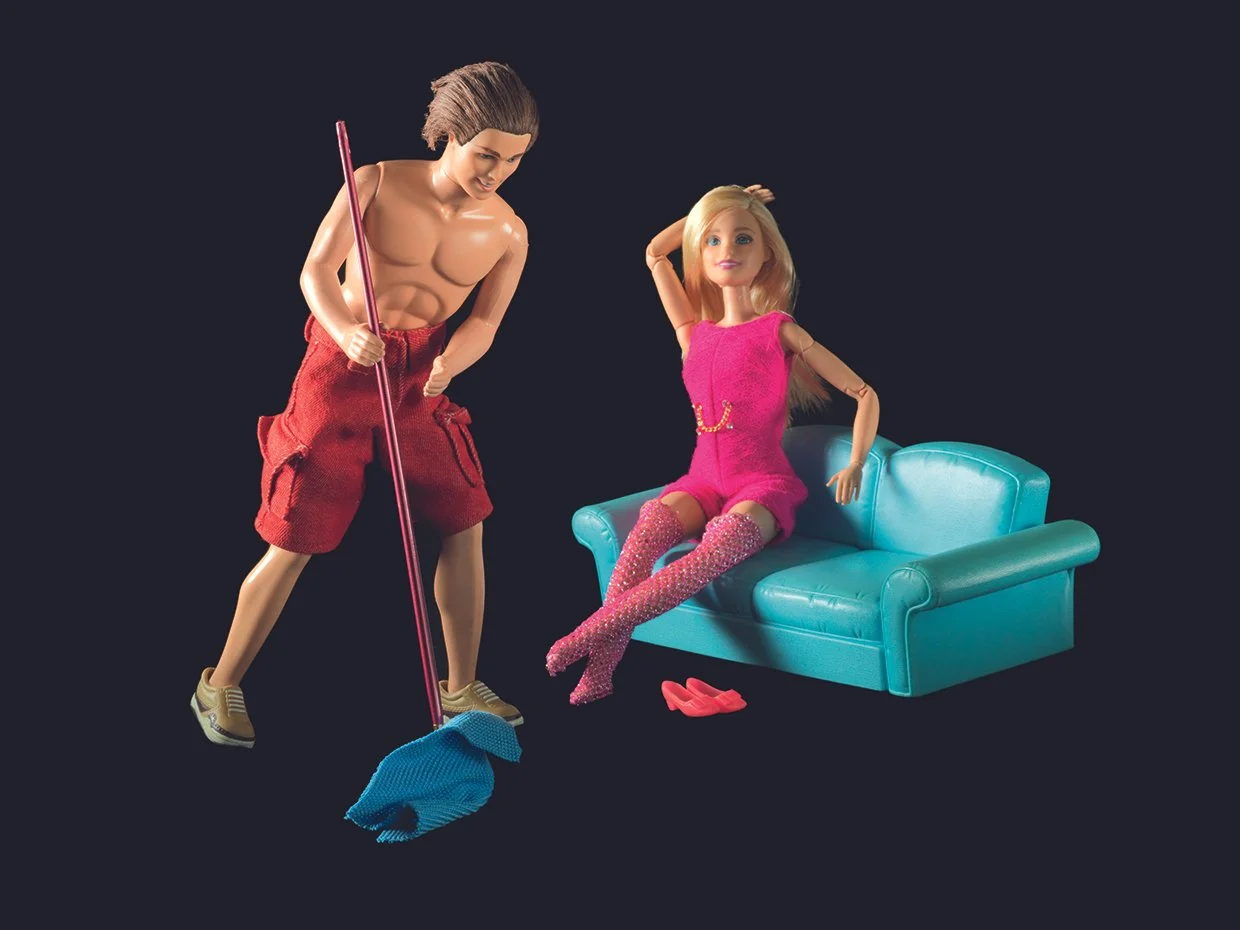
And then the industries, in a way, took that expertise over. And therefore, a massive design process became necessary. So it was a shift very much against the position of women, in a way, a very anti-equality shift, that happened. The industries took the expertise and said, "Okay, it's ours now. Now we produce food. Now we produce the cleaning products. And what we have left for the women on this planet is to go shopping and have fun."
And this is really critical. This idea of the system. What happened is that the industry needed a rational idea for production of the same things everywhere. Because the worst enemy of the industry is diversity. And so you can't use different sizes. You can't use different crops. You can't use different varieties, etc., etc.
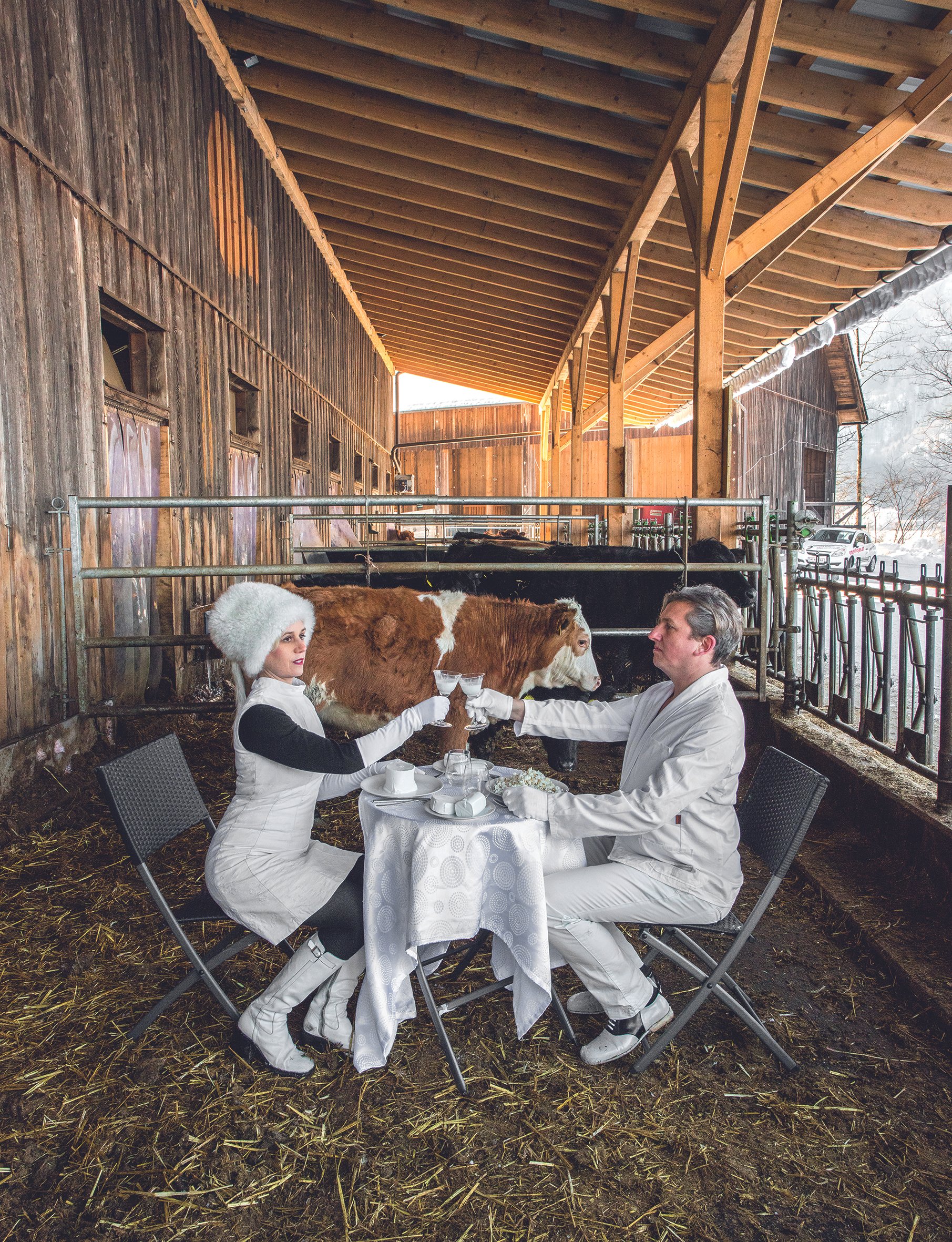
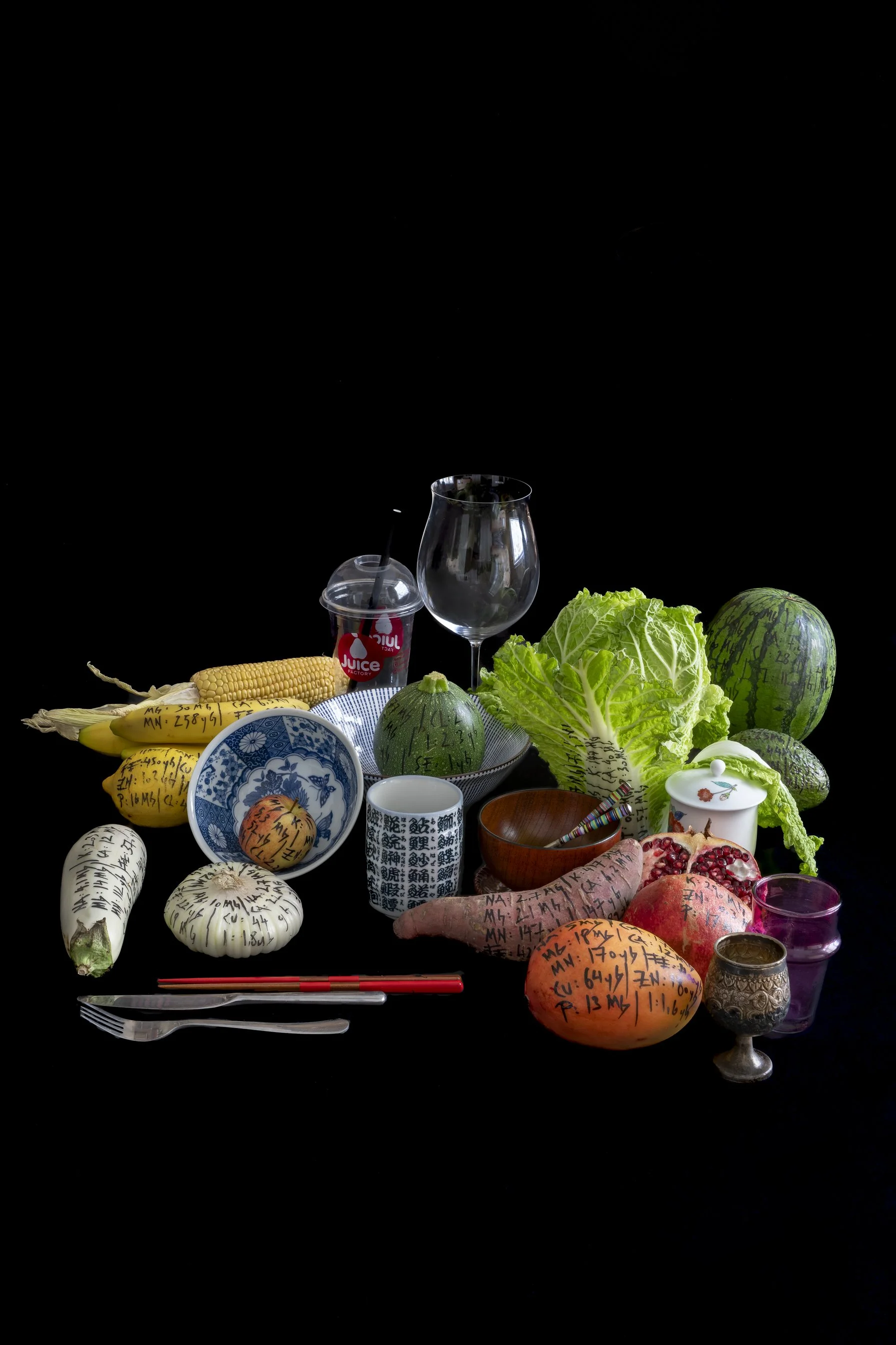
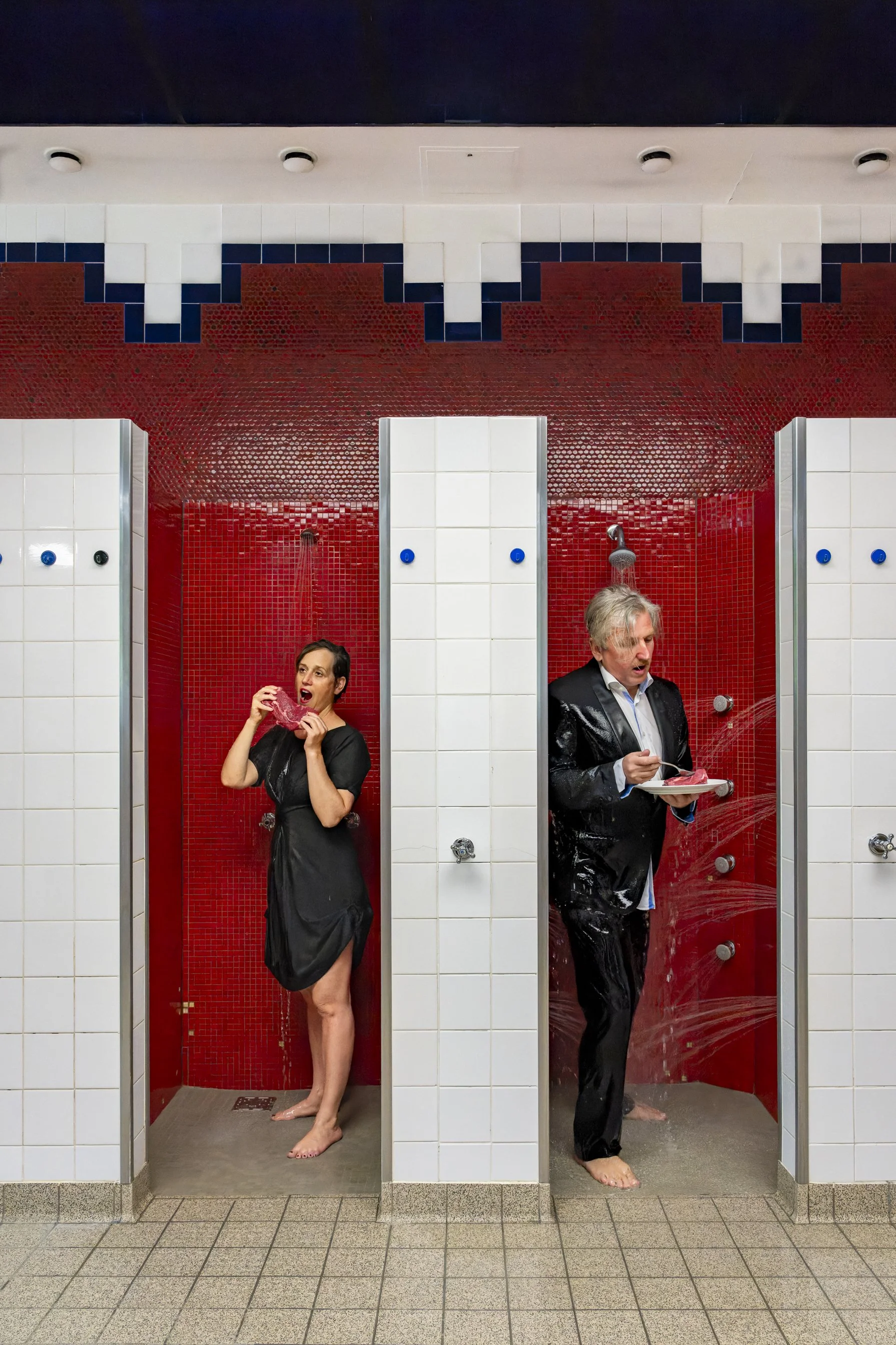
honey & bunny / Daisuke Akita / Ulrike Koeb
And our research showed that there were two countries on this planet, or two cultures, which were mainly responsible for this big shift, Germany and the US. It started somewhere in the 1870s with the need to create a wide system of food supply. Especially the army wanted to develop an industrial system to feed the military forces. Later on, they called it the Home Front. So if you look at the diets in Germany, for example, before the Nazis came to power, people in Bavaria, in Hanover, or people in Stuttgart and in Berlin, they all had completely different diets.
But in the last year before the First World War, the governments started implementing the new management of food production and delivery, which then led to standardised food systems for the entire country we have now. People did not want it at all.
So the governments created narratives. I mean, it was a process. There was not a big plan. But the process was called by a historian from Germany, Uwe Spiekermann, the Iron Triangle. And what the Iron Triangle means, that on one hand, you have military policy, or politics and military. Then you have science. And the third element is economics. And you need all these three corners of the triangle to work.
The introduced narratives claimed that the industrial food was healthier, that ready baby food was better, that industrial food was used to fight hunger, all of this. And now you see it everywhere. It was not just in Nazi Germany. The Soviets did it too.
PW:It's like this artificially created fear of bacteria, that pressure to clean all the germs away, while quite a lot of them are crucial for our survival.
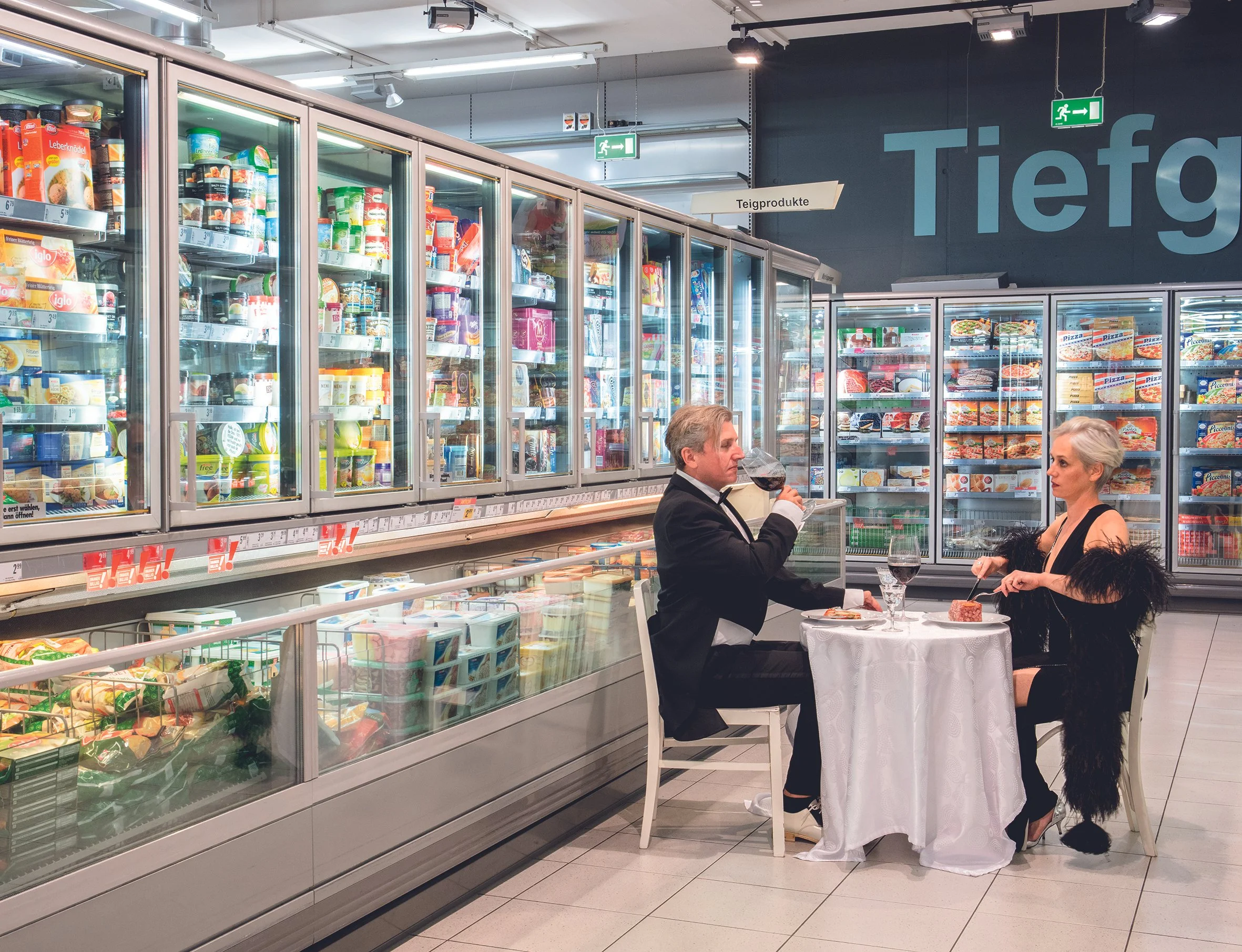
honey & bunny / Daisuke Akita / Ulrike Koeb
MH:And then, of course, the industries saw a light on the horizon. They said, "Wow, this could be a big business". And a system was developed which, in the end, especially in the US, really worked. If you look at war history, except for the Roman legions, every army faced issues with food supply and hunger. Even the Nazis had this problem. The only army, which solved the problem of hunger, before they started the war, was the US army, and that was implemented before the invasion in France.
They developed a super-industrialised system to bring all the food for the armies from the US to France. And nobody suffered hunger during the entire war. Well, not exactly nobody. But it ceased to be a major problem for the army. Then, they brought the system back to the US, and imported it into the normal culture.
So we have many different movements. And of course, It's not one reason for one result. I think there are many very interesting movements for us to consider when it comes to the design of food.
And the final question you were asking about, was let's say, concerning the aesthetics. I think this is also a very ancient idea, because food has always been representative. Even Alexander the Great had banquets with very rare foods, etc. It's well known that monarchs and aristocracy had extraordinarily aesthetic meals. And then, at least from the Renaissance on, still life came into prominence, and the art world started to paint and to represent the food. We still have it now, it's quite normal. You see it on any food packaging, everywhere. It's starting to have this porn quality. And, I mean, porn is always so boring. By the end, it's really like it wasn't what we expected. That's actually what we see on the pack and inside the pack. This idea of making things look better or look differently is really old. But now it has become commercial. This is a very interesting part for us that food exists within these many stories, representations and narratives. This is for me very, very strong. And so the question and danger of food systems is that I think over the centuries, throughout the entire history, tyrants or dictatorships, etc., they could burn books. They could destroy sculptures. They could ruin architecture. But they could not destroy food culture anywhere. No system was able to do that. Not The Nazis, not the Soviets, not the Chinese. But now we have new ways. Now as a result of this massive industrialisation, and the new ways of creating narratives with the help of algorithms and AI, which produce way more pictures of food than we have on the edible side, the food culture is being heavily influenced, if not altered.
So the machines started to write history. Machines started to create culture. And this is just by means of images and not even by real food anymore. And that's something that really concerns me.
honey & bunny / Daisuke Akita / Ulrike Koeb
PW: To me, one of the reasons why I asked about it, is because of the way I look at it. That sometimes, the standardisation of contemporary food, the beauty that you spoke of, in the context of history of art, was also, I think, concerned with finding the beauty in something that is different.
So you know, the wonky carrot was okay as long as it was beautifully painted. Or the apple that had a little worm inside was still within the picture. Now everything has to be standardised. And I almost feel that somehow that fear of different food and yes, you're absolutely right about the sources of it, but somehow it combines to me with the fear of any difference whatsoever that's being translated quite a lot within the culture and now politics again, right?
I think it has something to do with the class and the sense of what is accepted and what it's not. And of course, behind this, is capital, that as long as things are being produced and bringing the money, doesn't really care what narrative it is being used. But I think in this case, that narrative is kind of combined with something that is more than slightly dangerous.
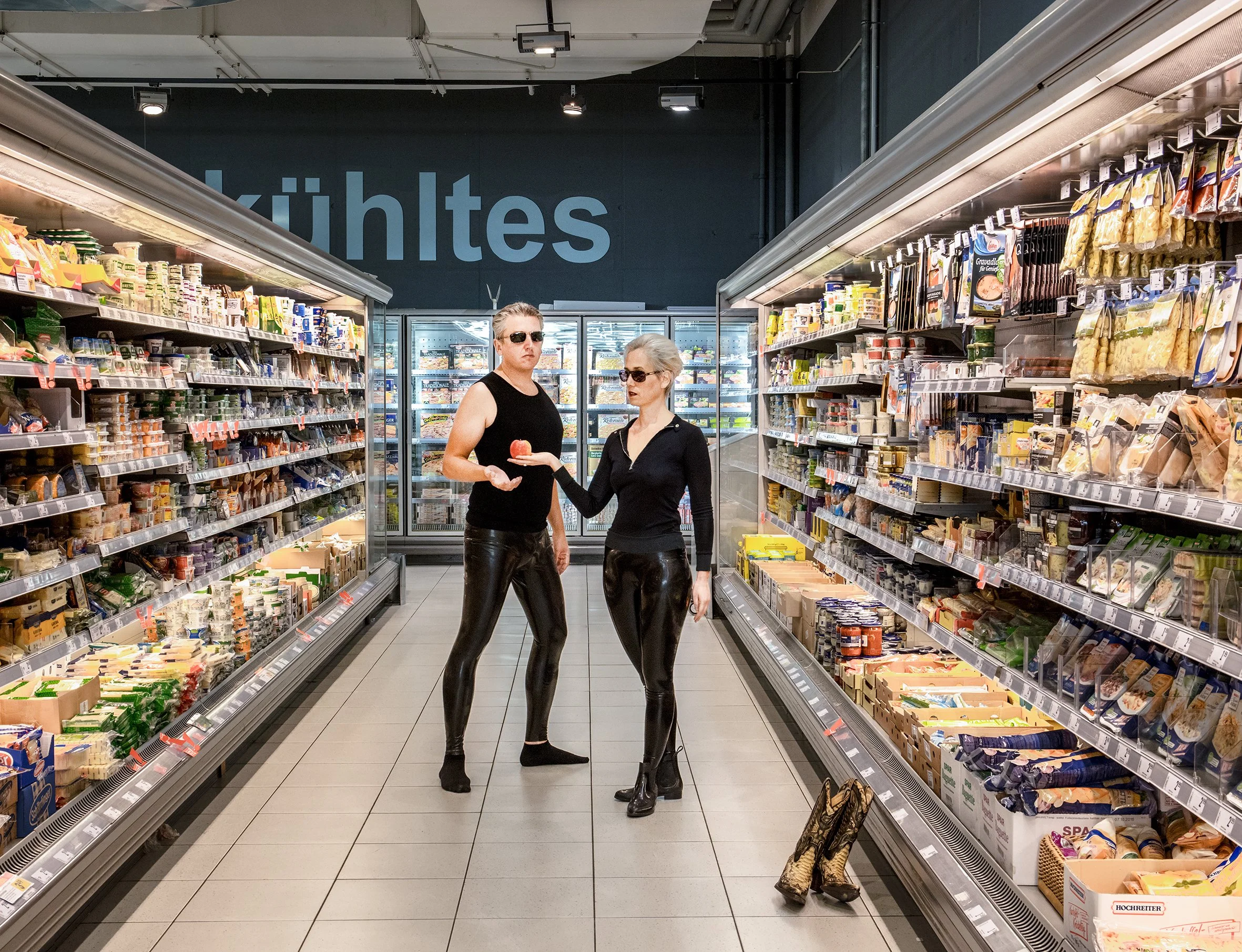
MH: Yeah, I think so too. What I also observe is, and this is quite interesting: you see that food, especially fresh food, is turning into, let's say, holy relics. Tourists massively go to marketplaces in Barcelona, Rome, or in Vienna just to watch apples or cauliflower.
honey & bunny / Daisuke Akita / Ulrike Koeb
PW: Oh, yeah. Here is the same. They go to Borough Market.
MH: I think it's more of a tourist attraction than a real market for the local people. And that's really, really weird. It's just food at the end. And people look at it like it's extraordinary or exotic, but it's still onions and potatoes. You can find them out in the fields. We use that a lot in our work.
When we are not sure about the audience; and many projects of honey and bunny are not directed at, let's say, an arty audience, many of our partners or clients do it for different audiences, like scientists, politicians, business people, or people on the street, then it's sometimes really difficult. So when we are not sure about the audience, we start by asking ourselves: “How can we touch them at the beginning? How can we open them to enter with our art project?” Using food or using an arrangement of food, like the color circles you've mentioned, always works. Everybody stops. You do a colour circle made out of foods, like vegetables. You do an arrangement of different colours of fruits and vegetables, and people get attracted. Nobody can keep their cool. Everybody stops. Everybody stares at it. And then you are given a chance. Again, it gives you the moment when the audience stops; "Okay, okay. Now they are paralysed for a minute. So that's our chance. We can bring them into another mood, into another situation." And that, for me, is the very power of food, even putting aside this idea of the rules, which is also really important. Because if you let people cross the border together with you during a performance, then you can bring in new content. And if you use food as a kind of an entry, they're open up. And they don't recognise the moment of the manipulation like, "Wow." And then, they do not recognize that you start messing them up.
PW: You also do it in a quite funny way. There are a lot of artists who use food as a medium by coming back to an act of communal cooking and that sort of thing. But you work differently, most of the time, you direct your attention to this ritual of beautiful dining out, of different type of social eating. It really works through this initial interest awakened by its aesthetics. It's so beautiful that it makes it quite easy to at the same time apply the irony on the set up. It doesn't really have much resistance against the humor.
honey & bunny / Daisuke Akita / Ulrike Koeb
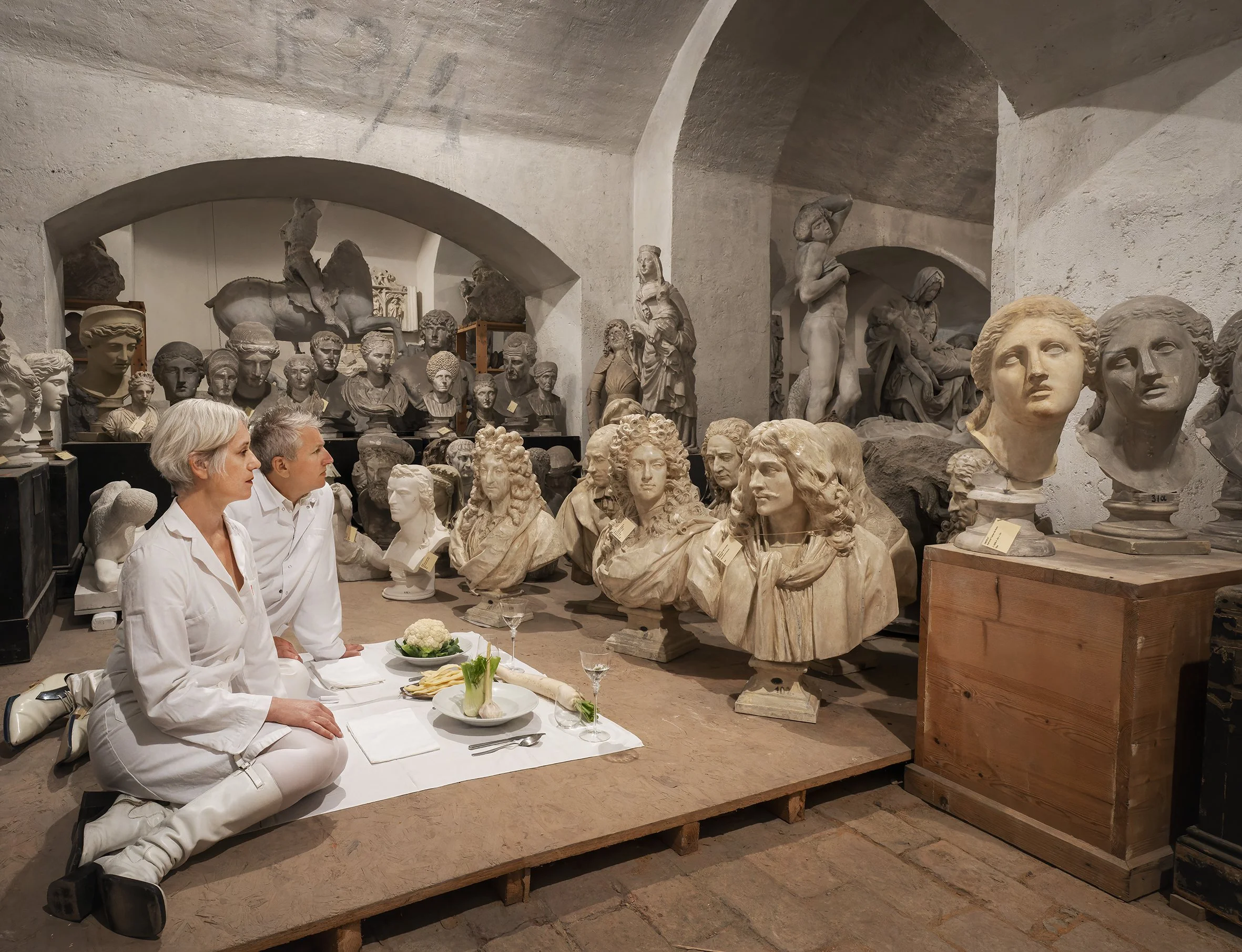
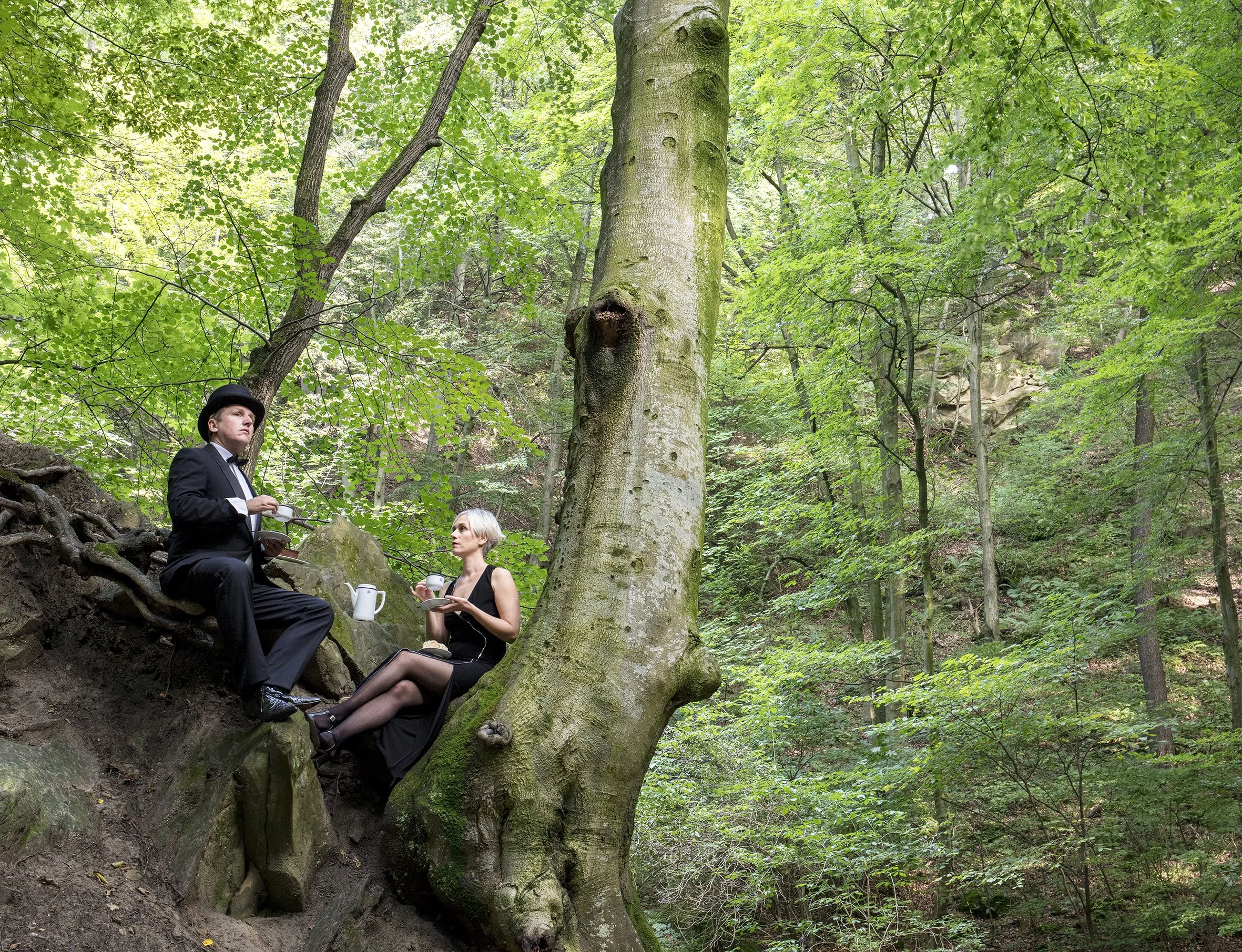
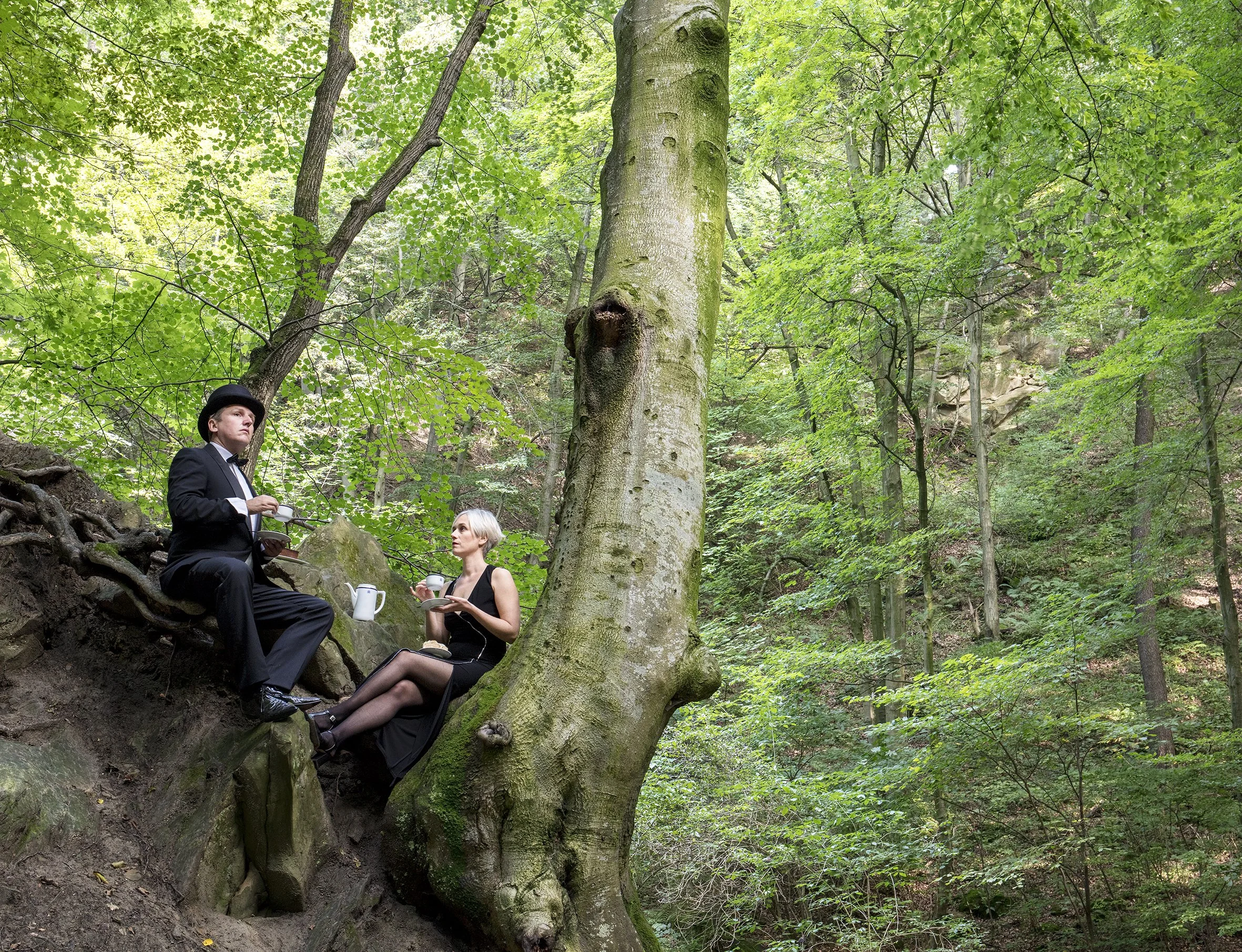
MH: It's funny. We love going to restaurants, and we do it a lot. But we are not gourmets. So we do not run to Michelin-starred restaurants or something like that. I think it's a kind of interpretation of bourgeois life. And bourgeois life is something we are not from, but is something which fascinates us in a kind of ironic way. It's really ridiculous, because it presents itself as this attempt to control everything by rules applied on behavior by etiquette, table manners and so on. And it's really funny. We think a lot about behavior. Maybe that's why we try to interpret these dining situations so much, because they are so funny.
I've never thought about that.
PW: It is kind of funny. You know, here, I'm not sure how it is in Austria, but here, we also experience another aspect of ritualisation. And that's the ritualisation of being shown how you are environmentally conscious. So for example, the wonky vegetables that I've mentioned. There is an actual company that specializes in buying from farms those rejected vegetables and fruit, something that is not accepted by the European Union or industrial agriculture standards. And they sell them in boxes. So you can order a box. And if you are a really nice bourgeois family, you get the box of the wonky vegetables delivered every week. And you can be assured that in this way, you're helping the Earth. But the ironic part is that, of course, the people who are pretty poor, to whom those wonky vegetables could go literally for nothing, because they've been rejected anyway, they never get them because they can't afford them, because they're overpriced. So there is that.
I wanted to ask you about sustainability in this context, because you speak about it a lot. And this is something that I've been thinking about a lot myself. I'm trying to see how we could possibly have a sustainable solution with the reality of the industrial system being so incredibly embedded within the fabric of the world and spread globally. Where do we even start?
MH:Well, in my personal opinion, the food systems are a very good point to start, because it is something you can change every day. It's not like changing mobility. It's not like changing where you live. It's not like changing the energy you use. It doesn't necessarily mean that you have to have massive costs. You can do it one day a week.
Let's say it differently. It's not about personal consumption behavior. I mean, it is a bit. I hate this argument that the poor, lonesome mother of three kids without a husband can't afford organic food, and therefore, we do not need to produce it. I mean, that's so cynical.
honey & bunny / Daisuke Akita / Ulrike Koeb
PW:Kind of disgusting. Yeah.
MH: Yeah. It kind of is.
And yes, it makes a difference if many people do, let's say, a vegetarian day a week or a vegetarian meal a day or, I don't know, try to at least buy something organic. That's really important. And everybody can do it. And that's what I mean. The steps can be very small. But in the end, the big question about sustainability, and especially if it comes to food, is political. We do not need to consume in a different way. We need to understand and see ourselves as citizens and not as consumers. And this is one of the worst misunderstandings of the present, that we are not citizens anymore. We do not interpret ourselves as citizens anymore, but as consumers.
Just to give you an example, as far as I know, €83 billion per year of public money is paid for school meals in the European Union. And if you would create a law saying that at least, I don't know, 30% of these school meals need to be organic, then you could possibly change the entire agricultural system within the EU.
And it's not about costs anymore. It's about what do we want to have as a society? And this is, in my opinion, an important question. Do we really need highways to drive like hell everywhere? Do we really need this and that? I mean, do we need a State Opera House in Vienna?
In my opinion the question is, what does a society stand for? And I think it is really important also for us as artists to have an opinion about that.
The other very important aspect about sustainability for us is that the sustainability movement has two major problems. The first is that it doesn't have any sense of humor. And without humor, you can't convince people. It's the most humorless movement I've ever seen. And people hate serious people. I mean, serious people are always like teachers. And we do not like teachers. I mean, who wants to be tutored all the time? If somebody starts to teach you; “You need to do this and that” you instinctively pull away.
honey & bunny / Daisuke Akita / Ulrike Koeb
PW: It's that movement of going into a defensive, right?
MH: And the second problem is that the sustainable movement does not have proper narratives. They do not have narratives, implicit and explicit. By explicit I mean that there is no idea of what could be good. It's always about what will be bad. The world right now is not a good one. I don't want to see an even worse future every day. It's hard to ignore the power of these four-five white men who destroy the world right now. We need positive ideas. We need to ask ourselves :”What can I win?” It is the same about the aesthetics. And this is what we call implicit language. We need an implicit narrative too. Our desires right now are really industrialised. We desire cars. We desire industrialised food. Everything is ready in the market. We desire digitalization. Really? Why? What's the benefit of social media? Why should I need it?
I need it because it's so normalised that I can't survive without it anymore as an artist. And so I need to use it. It's a dictatorship in a way. The system controls my business, my life. We lose sovereignty. And this is really important for us as artists to ask the question:,"Okay, how can we fight back our sovereignty? How can we fight back aesthetics? How can we fight back narratives?" Because we have the lever in our hands. We create in the end. It's just us. It's not Zuckerberg. It's not Jobs. It's us. It's designers, architects, and artists. And we need to find that way again.
PW: I often think about this sentence that I read somewhere, "We don't even remember how it is to be hungry anymore in developed countries. We don't eat food anymore because we're hungry. We eat food because it's a pleasure." Which, in a sense, is great. At the same time, when you think that there is a huge part of the planet that is hungry almost constantly, and another huge part which is destroyed because of overproduction, that is quite problematic. But of course, as you said yourself, it's humorless.
I agree that the planet is at the moment in such a state that at some point, I simply can't take any more bad news. You want to go into this survival mode and turn away from it. You're absolutely right that the sense of positive narrative is really quite important and very much needed right now.
But it's also, I think, about just showing people maybe that being sustainable is also a pleasure, that there's also a sense of something gratifying in it.
This combines with my last question, which is about the future. I have this very weird idea about the Anthropocene time, the Late Anthropocene time, that we live in a time of slightly fractured time modes, that the future is not necessarily in the future per se, because some of the futures have already happened. That certain extinctions have already happened even though they're not finished yet, but the future has been decided already. And if it comes to the climate catastrophe, as I call it, some of the futures have been decided, but some of them not. How do we think about this in the sense of slightly disrupted time, really?
Also, because of social media and the digitalisation that you've mentioned, you experience this instant gratification mode, and even though everything that you watch on social media is already in the past, you still treat it as in the present. So there is another disturbance to the notion of the future.
MH: I think, on one hand, it's, again, the fight-back question for me. The future was conquered by technology and capitalism. So whenever you think about the future, you think about robots, AI, blah, blah, blah. Innovation of the future is completely in the hands of the technology bubble. And this is, of course, a money-driven industry. Completely. It's a money machine. And it's a male money machine. It's a patriarchal money machine.
They took the future from us. And it's not just, let's say, tomorrow. But way further. The idea of tomorrow. Nobody talks about equality. Nobody talks about solving democratic problems, etc. That's a big problem.
There is a German, Harald Wetzel, who once said that for him, the best development since 1945 is that at least in Europe, any state does not allow anymore the use violence. Even at home nobody is allowed to be violent. And that's amazing progress, actually. I think if we talk about the future, we have to develop new goals.
It's not about what will happen in the future, but what we want to have by then. What kind of benefits do we want to see? What kind of progress do we want to have? I would like to say I want to see progress in democracy, for example. The idea of democracy is very important. But we need to develop it further. It has been the same system for 120 years. And it has its flaws and it has a history of failures. It is clear in a way that society has to progress. That's actually what makes me feel positive. And as you have said, it's not just about climate change, which does have progress . It's also about working against climate change. We are already going through an energy change. We are already experiencing a change of narratives, at least within the European Union. Nobody doubts climate change anymore. And there is a massive progress within the society as well. The narratives since, I don't know, the '80s or even the 2000s shifted massively. And that's something we need to see as well. And it's good.
There are developments which are good, and we need to keep an eye on them. And yes, there is a lot to do, but I think sometimes we are a little bit too future-driven.
honey & bunny / Daisuke Akita / Ulrike Koeb
PW:There is this beautiful book that I really love, "Mushroom at the End of the World," by Anna Lowenhaupt-Tsing. She is a contemporary anthropologist, and she works with the Anthropocene, and in this particular case she also looks at things that sort of exist on the fringes of capitalism. In the "Mushroom at the End of the World," she takes on research of the matsutake mushroom, the Japanese truffle equivalent. Among other things she looks at how it's being harvested and communities who do it.
For example, in the US, quite a lot of people who pick up those mushrooms are the immigrants from Southeast Asia, with often quite challenging immigration status, but also very often people who are running away from different forms of dictatorship or political trauma. So they have a different attitude to the power and living in a forest and picking up mushrooms. It's something that they can work out in terms of their ways of life. But she basically asks at some point whether maybe the answer is not looking to break capitalism and replace it with a different system that's, again, quite major and global. Maybe the answer is actually to work small, and start to work on the fringes of capitalism, and break it from the inside by the small solutions.
And to me, it really binds what you said about organic food. I always think this when people go, "Oh, someone is using private jets, so I don't need to switch off the light bulb," but I'm always having this argument that 8 billion light bulbs are quite a lot.
And the same goes to what you said about the school dinners. There are a lot of children in the European Union that could eat. Not only that replaces the way of the food production, but also, I think, we're kind of going back to a very simple idea where the food is supposed to sustain you and keep you healthy, which organic does the best. Let's face it, right?
MH: But in the end, and this is also very important for our work, we need to understand that a decision is normally not an individual thing. A decision is something which is related to the group we are in. It is a social result in the end. And that's something we lost as artists in a way. The knowledge that we can change a group of people, because we are producing culture, and culture is always human-made. Culture is not Nature at all. They're just constructs of humans. And artists develop culture. And they constantly change it.
We have learned through our performances that whenever you do art, you manipulate people. And nobody can say that she or he does not do that because it's not possible to do it.
But we need to take care of this responsibility. We need to understand that we have responsibility, and we have to treat it with care. And as I said, it's a lever. And if we try to convince a group of people, if we try to change culture a bit, we will do it in the end, maybe not as quickly as we want to have it, maybe not as obvious as we want to have it, but it is a lastling impactful change.
I heard a very nice sentence by an Austrian comedian. He said once that maybe he's not convincing people. Maybe he's not changing people's minds, but in the end, he gives the people the feeling that they are not alone with their doubts. And I think this is always a big thing, that since the beginning of civilizations, we have the silent majority.
I remember when I was a young man, I always had this interpretation that the male's world was just macho. And I was really pissed off. I grew up in the countryside. And it was so disgusting that all these young men, they were so patriarchal, so macho, so violent in a way. And then, I found out that it was normally just one. But nobody wanted to, I don't know, revolt or to say something, or to oppose this behaviour, in a way. And I think 80% did not accept what these leaders said all the time about girls. But nobody said something against it. And then in the end, if you're honest to yourself, you admit; " I mean, for me, this guy was an asshole." And that's something which is also the power of the arts, that we can give people the feeling that they are not alone. We can give people the feeling that doubt is normal.
PW: I think this is where you hit it on the nail. I think that art has this very rare ability to provoke questioning things. You don't take things for granted anymore when you experience art. You don't accept the status quo as it is. It provokes to question the status quo, or at least to bring in doubt.
MH: I think doubt is a human right. I remember when I was a young man, I started to read, and then I realised; ”My God, there are other people, famous ones, who had the same doubts as me.” And it was so good to understand that I was not alone. And in a way, literature, at the beginning, saved my life. And I think this is not just about, let's say, the out-of-the-box, the very unconventional ideas, etc. It's just about saying that some things are not normal.That your doubt is your right.
PW: The kind of sense of giving you assurance that it is okay to say ‘No’. It is okay to disagree, right?
MH: Yes.
PW:This has been really, really lovely.
MH: For me too.
honey & bunny / Daisuke Akita / Ulrike Koeb
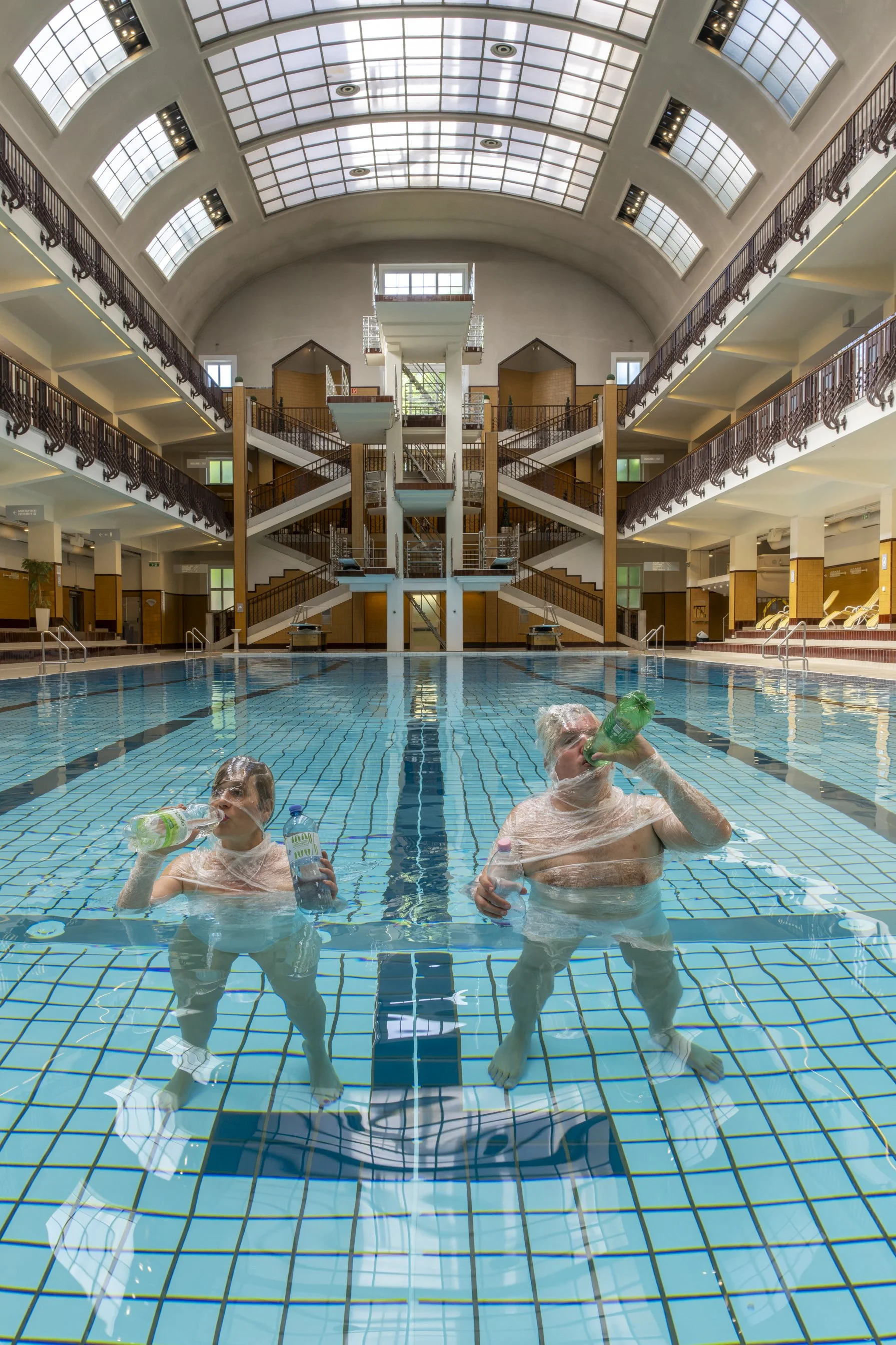
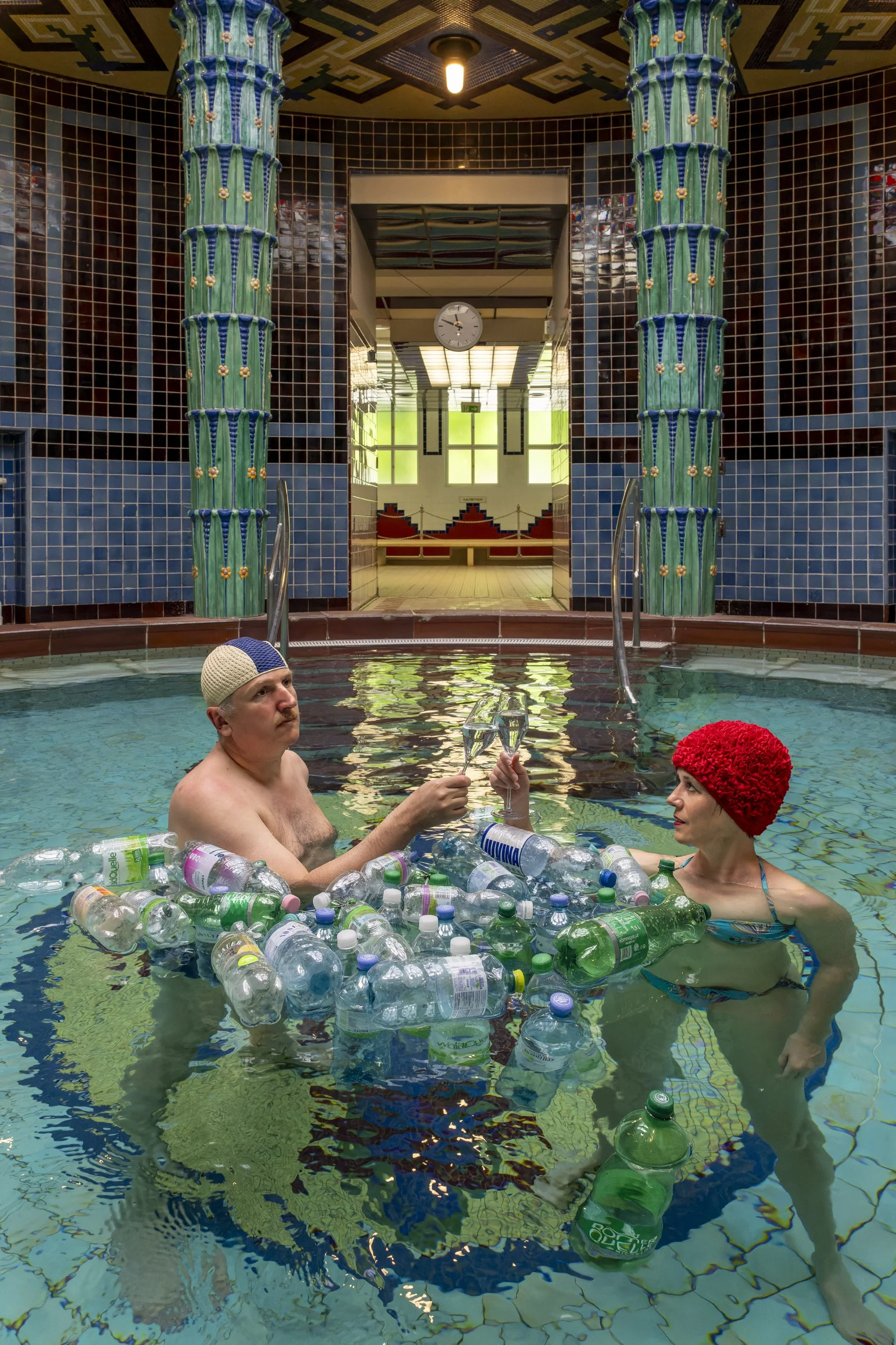
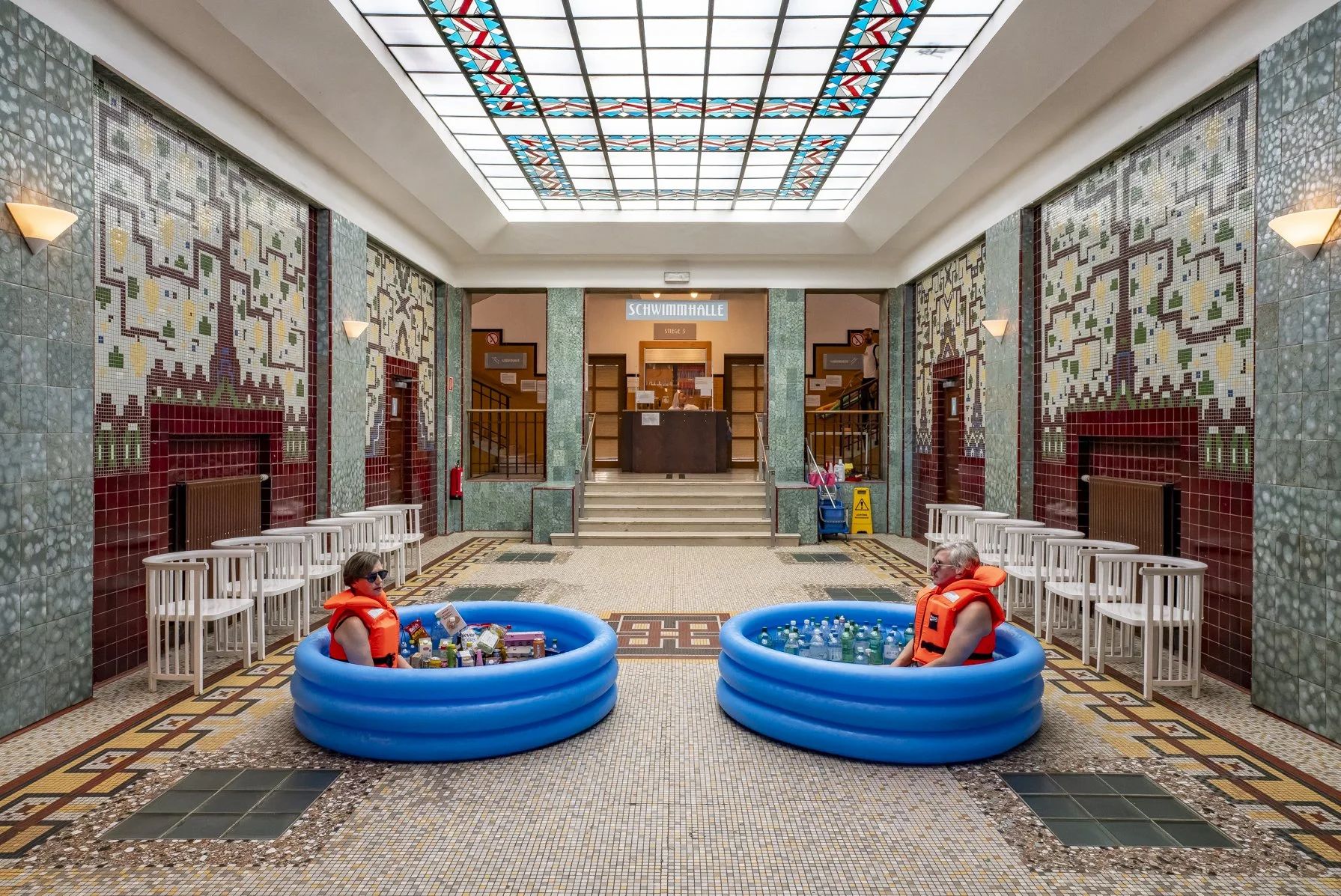
The artist duo honey & bunny (Sonja Stummerer and Martin Hablesreiter) use their practice to pose questions about the nature of food culture, production and consumption mechanisms. Looking at our eating habits and rituals, cultural and social narratives around food production, design and consumption, they explore ideas of sustainability, use of our resources, and impact of food on our environment and mechanism of culture-making in the context of food. Their playful, humorous, ironic performances disarm and provoke to question and doubt all that we are told and made to believe in the area of sustaining our life in culture. Paraphrasing what M. Hablesreiter said, everyone digests, everyone and everything has to eat, but only humans use food for making culture.
Above all, however, they are looking for ways out, narratives and aesthetics to make the production and consumption of food more "sustainable".
Dr. Sonja Stummerer and Martin Hablesreiter both studied architecture in Vienna, Barcelona and London before working for Arata Isozaki in Japan. The later Pritzker Prize winner pointed out to them that the most important task for designers, architects and artists in the future would be to provide sustainable, resilient and dignified care for up to ten billion people. Inspired by this, Sonja and Martin founded the interdisciplinary studio honey & bunny and began their research into food. They are considered co-founders of the discipline of food design. honey & bunny have exhibited at the Victoria and Albert Museum in London, the MAK in Vienna, the Museo della Scienza in Milan, the Palazzo Triennale and the August Kestner Museum in Hanover, among others, and have also performed internationally. Since 2015, they have been collaborating intensively with scientists from a wide range of disciplines.
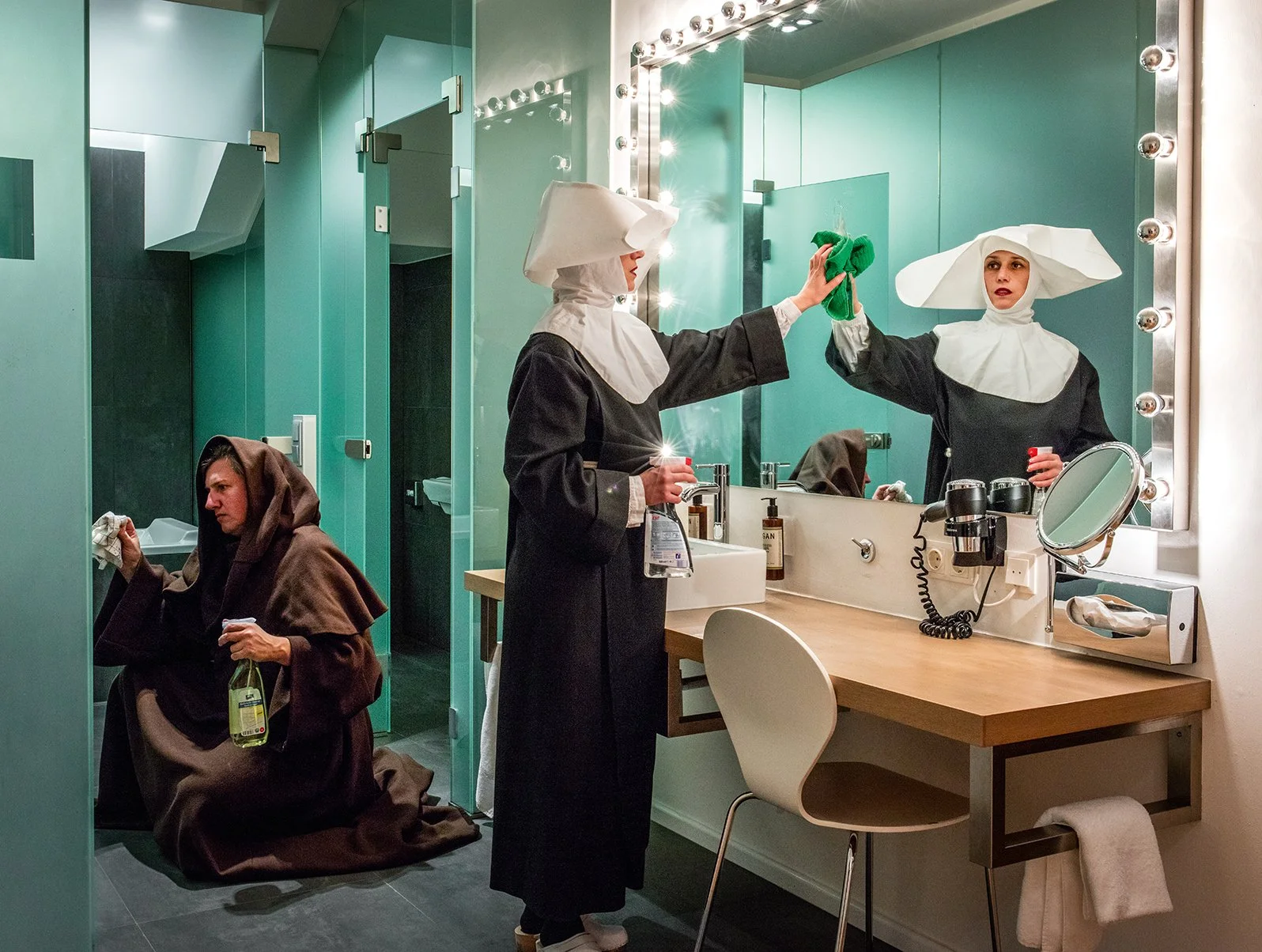
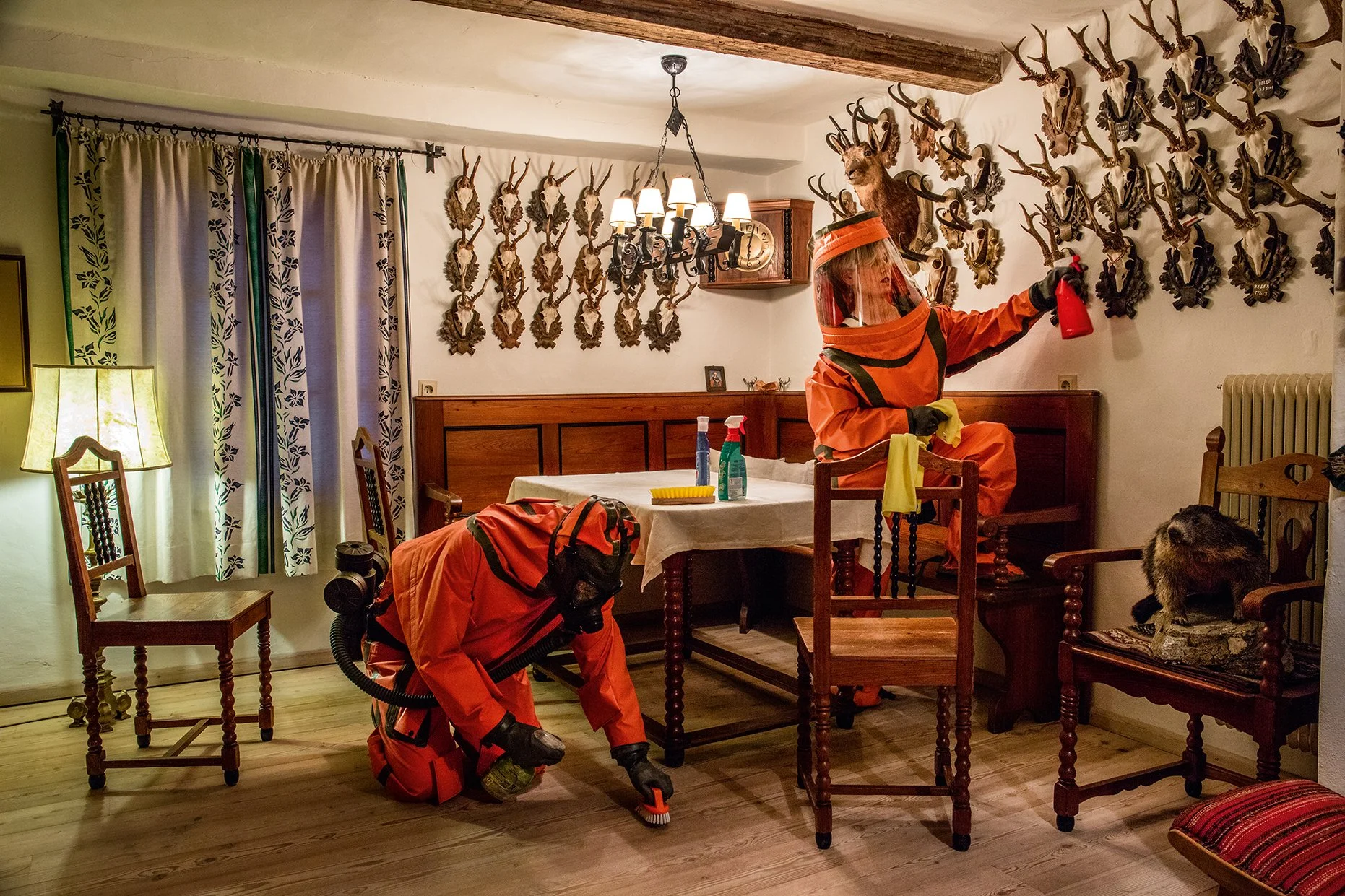
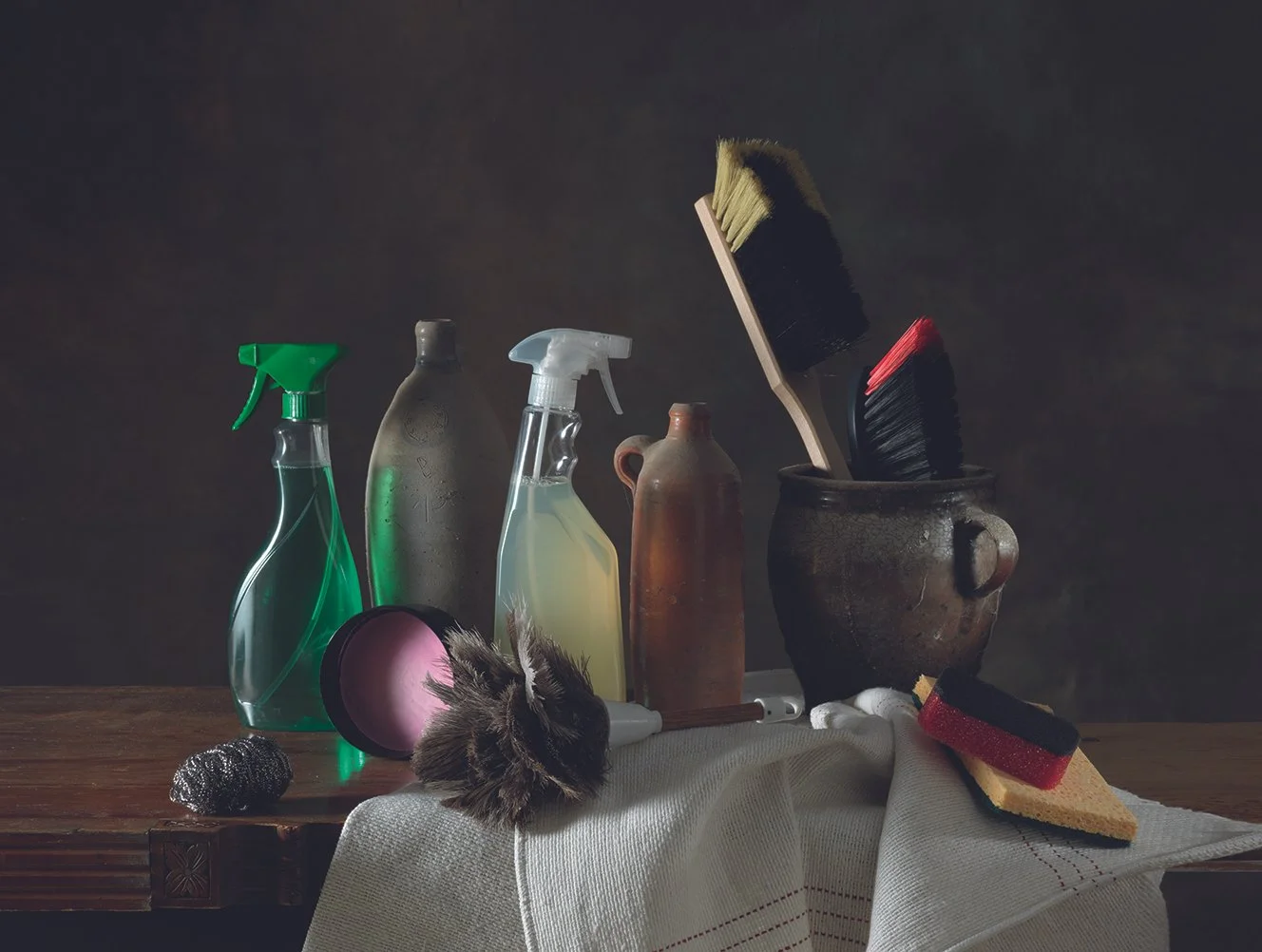
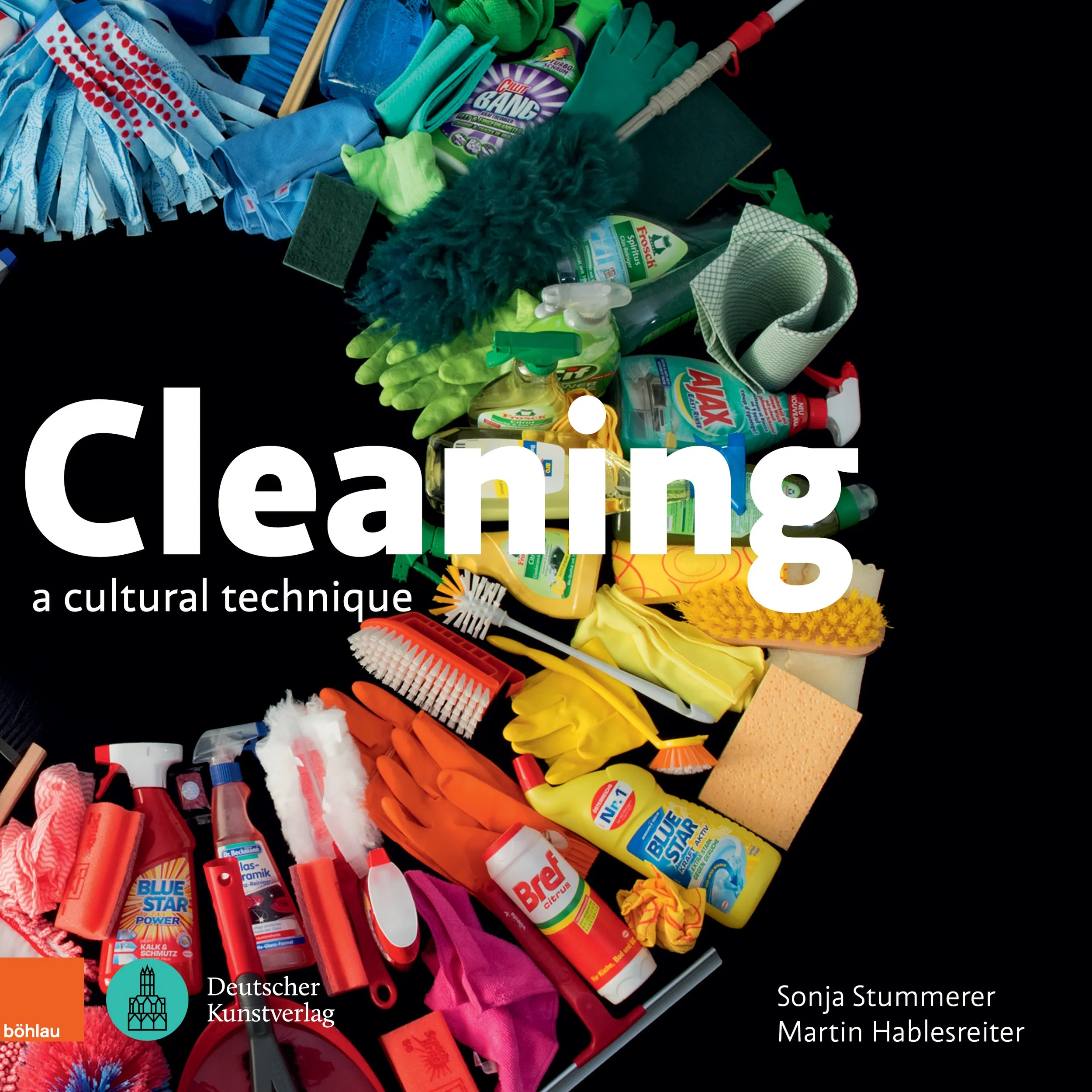
Cleaning- a cultural technique, the newest publication by the duo, by addressing dirt and cleanliness, cleaning agents, equipment, and machines, (clean) surfaces and polluted environments, interrogates the unwritten cultural rules around cleanliness and order.
honey & bunny / Daisuke Akita / Ulrike Koeb
